
Introduction
Metal cased oil seals are critical components in rotating equipment, serving as a static barrier against lubricant leakage and ingress of contaminants. Positioned within the power transmission and fluid handling industry chain, these seals are integral to the reliable operation of engines, gearboxes, pumps, and hydraulic systems. The core performance characteristics – sealing efficiency, pressure resistance, temperature stability, and wear durability – directly impact machine uptime and overall system efficiency. Unlike elastomeric seals, metal cased seals utilize a metal housing providing structural integrity and compatibility with demanding operating conditions, especially high temperatures and aggressive media. A key industry pain point is maintaining consistent sealing performance over extended service intervals while minimizing friction and wear, leading to ongoing material and design innovations.
Material Science & Manufacturing
The construction of metal cased oil seals typically involves a metal housing – frequently steel (carbon steel, alloy steel, or stainless steel) – and a sealing lip, often composed of a PTFE compound, rubber (nitrile, Viton), or other engineered polymer. The metal housing provides mechanical strength, dimensional stability and resistance to external pressures. Carbon steel offers cost-effectiveness but is susceptible to corrosion; alloy steels provide increased strength and wear resistance. Stainless steel offers superior corrosion resistance, crucial in harsh environments. The sealing lip material is selected based on fluid compatibility, temperature range, and desired coefficient of friction. PTFE exhibits excellent chemical resistance and low friction but has limited elastic recovery. Rubber compounds provide good sealing characteristics but are vulnerable to degradation by certain fluids and elevated temperatures.
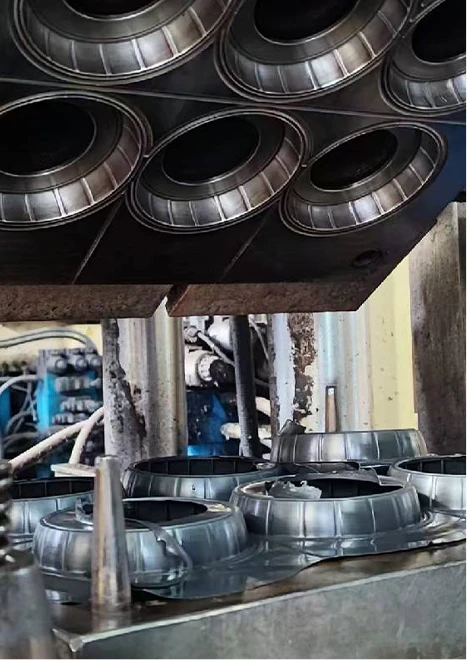
Manufacturing processes vary depending on the seal’s complexity and volume. The metal housing is often produced via deep drawing or stamping, followed by machining operations to achieve precise dimensions and surface finish. The sealing lip is typically injection molded, requiring precise control of temperature, pressure, and material flow to ensure consistent quality. The lip is then bonded or mechanically retained within the metal housing. Key parameters include housing thickness to prevent deformation, lip interference fit for effective sealing, and surface roughness control to minimize friction. Heat treatment processes, such as carburizing or nitriding, can enhance the hardness and wear resistance of the metal housing. Quality control at each stage, including dimensional inspection, material verification, and leak testing, is paramount.
Performance & Engineering
The performance of a metal cased oil seal is governed by a complex interplay of factors, including applied pressure, rotational speed, temperature, and fluid properties. Force analysis is critical during design, considering both radial and axial loads. The sealing lip undergoes continuous deformation during operation, generating a frictional force that counteracts the fluid pressure. Proper lip geometry and spring loading are essential to maintain contact without excessive wear. Environmental resistance is crucial; seals must withstand exposure to corrosive fluids, abrasive particles, and temperature extremes. High-temperature applications require materials with high thermal stability and resistance to oxidation. Low-temperature applications demand materials that remain flexible and retain their sealing properties.
Compliance with industry standards, such as those defined by SAE International and ISO, is paramount. These standards specify requirements for material properties, dimensional tolerances, and performance testing. Furthermore, functional implementation necessitates consideration of shaft surface finish, housing bore characteristics, and installation procedures. A rough shaft surface can accelerate wear, while improper installation can lead to premature failure. Finite element analysis (FEA) is frequently employed to optimize seal design and predict performance under various operating conditions. Lubricant compatibility testing ensures the sealing material does not swell, shrink, or degrade when exposed to the specific fluid being sealed. The seal’s ability to maintain a consistent sealing force over its service life is a critical engineering challenge.
Technical Specifications
| Parameter | Unit | Typical Value (Carbon Steel Housing/Nitrile Lip) | Typical Value (Stainless Steel Housing/Viton Lip) |
|---|---|---|---|
| Maximum Operating Pressure | MPa | 10 | 20 |
| Operating Temperature Range | °C | -40 to 100 | -20 to 180 |
| Rotational Speed Limit | RPM | 5,000 | 8,000 |
| Shaft Diameter | mm | 10 - 100 | 10 - 200 |
| Housing Material | - | Carbon Steel (e.g., 1045) | Stainless Steel (e.g., 304/316) |
| Lip Material | - | Nitrile Rubber (NBR) | Viton (FKM) |
Failure Mode & Maintenance
Metal cased oil seals are subject to various failure modes. Fatigue cracking in the metal housing can occur due to cyclic loading and stress concentrations, particularly around sharp corners or edges. Lip degradation, caused by chemical attack, thermal oxidation, or abrasive wear, leads to loss of sealing effectiveness. Delamination of the lip from the housing can result from improper bonding or thermal stresses. Excessive wear can be accelerated by contamination, improper lubrication, or misalignment. Oxidation of the metal housing, especially in carbon steel variants, can compromise its structural integrity. A common failure analysis reveals that the majority of failures stem from lubrication issues, either insufficient lubrication or the use of incompatible lubricants.
Preventive maintenance is crucial to extend seal life. Regular inspection for leaks, wear, and damage is recommended. Maintaining proper lubrication levels and selecting compatible lubricants are essential. Shaft alignment should be verified to minimize eccentric loading on the seal. Contamination control – implementing effective filtration systems – prevents abrasive wear. If replacement is necessary, ensure the new seal is properly installed, following manufacturer’s instructions and using appropriate installation tools. Periodic analysis of failed seals can provide valuable insights into operating conditions and identify potential improvements in seal design or maintenance procedures. The frequency of inspection and maintenance should be dictated by the severity of the operating environment and the criticality of the equipment.
Industry FAQ
Q: What are the primary advantages of metal cased seals over purely elastomeric seals in high-temperature applications?
A: Metal cased seals offer superior temperature resistance compared to purely elastomeric seals. The metal housing provides structural stability at elevated temperatures, preventing the seal from deforming or losing its sealing properties. Elastomeric seals often soften and lose their resilience at high temperatures, leading to leakage. The metal casing also acts as a heat sink, dissipating heat away from the sealing lip.
Q: How does shaft surface finish affect the performance and lifespan of a metal cased oil seal?
A: Shaft surface finish is critical. A rough shaft surface creates increased friction and accelerates wear of the sealing lip. It also provides sites for abrasive particles to accumulate, further contributing to wear. A smooth, honed finish is recommended to minimize friction and maximize seal life. The ideal surface finish is specified by the seal manufacturer.
Q: What is the impact of fluid compatibility on the selection of the sealing lip material?
A: Fluid compatibility is paramount. The sealing lip material must be resistant to chemical attack, swelling, or degradation by the fluid being sealed. Incompatible fluids can cause the lip to swell, shrink, or lose its elasticity, leading to leakage. Careful consideration of the fluid’s chemical composition, temperature, and pressure is essential when selecting the appropriate lip material.
Q: How can the risk of fatigue cracking in the metal housing be minimized?
A: Minimizing stress concentrations is key. This can be achieved through careful design of the housing geometry, avoiding sharp corners and abrupt changes in section thickness. Surface treatments, such as shot peening, can introduce compressive stresses that improve fatigue resistance. Proper material selection, using alloy steels with high fatigue strength, is also crucial.
Q: What preventative maintenance procedures are recommended for metal cased oil seals in critical applications?
A: Regular visual inspections for leaks and damage are essential. Monitoring lubricant levels and ensuring proper lubrication are critical. Implementing effective filtration systems to remove contaminants is highly recommended. Periodic shaft alignment checks should be performed to minimize eccentric loading. If a seal fails, a thorough root cause analysis should be conducted to prevent recurrence.
Conclusion
Metal cased oil seals represent a robust and reliable sealing solution for demanding industrial applications. Their performance is dictated by a complex interplay of material science, manufacturing precision, and engineering design. Selecting the appropriate materials, controlling manufacturing parameters, and implementing effective preventative maintenance procedures are critical to ensuring long-term performance and minimizing downtime. The choice between carbon steel, alloy steel, and stainless steel housings, coupled with the optimal sealing lip material, directly impacts the seal's ability to withstand specific operating conditions.
Future advancements in metal cased oil seal technology will likely focus on developing new materials with enhanced wear resistance, improved temperature stability, and increased chemical compatibility. Further optimization of seal geometry through FEA and the integration of advanced surface coatings will contribute to extended service life and reduced friction. The continued development of smart seals, incorporating sensors to monitor seal performance and predict failure, will enable proactive maintenance and further enhance reliability.