
Introduction
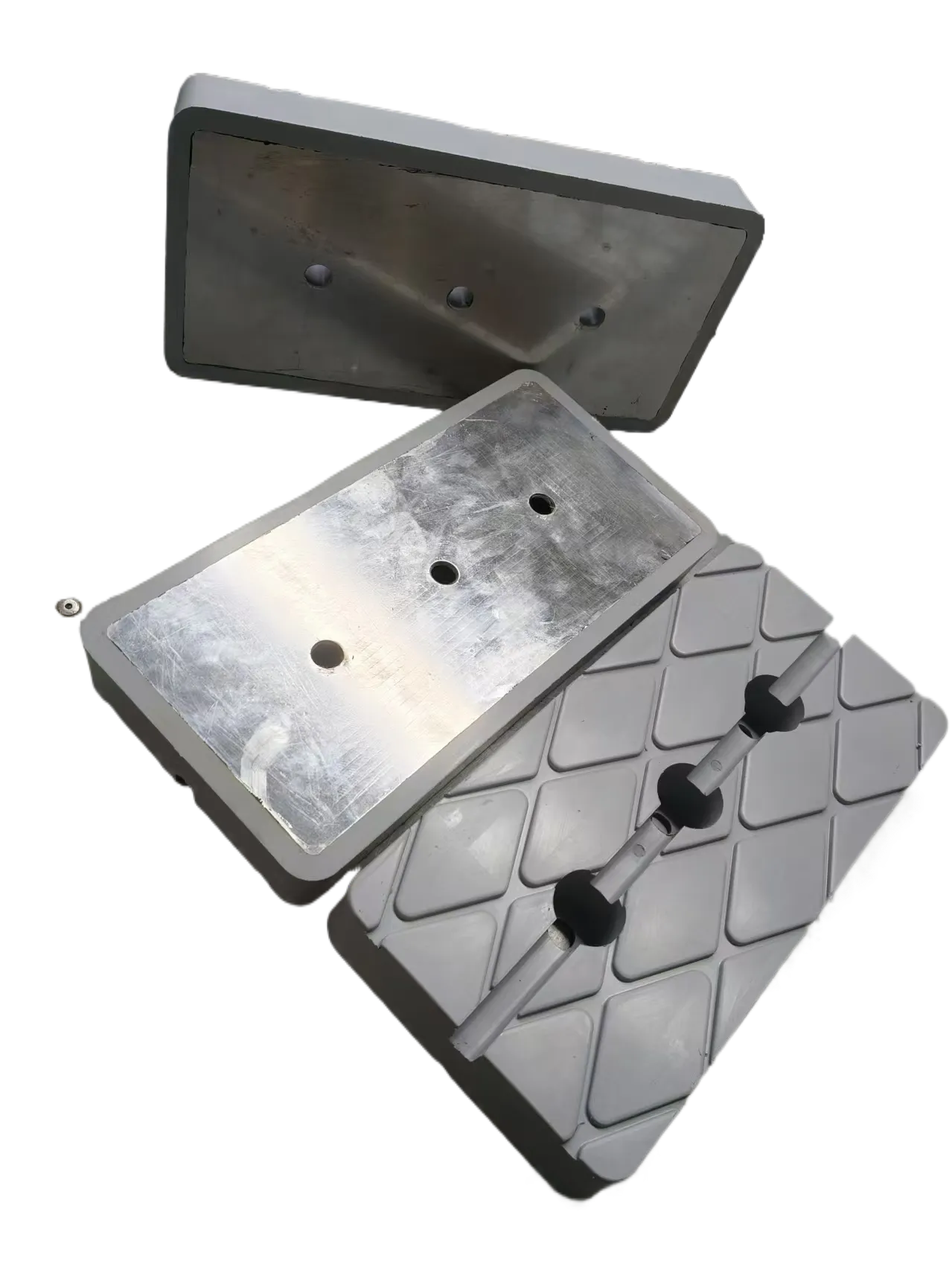
Metal end caps are critical components utilized across a diverse range of industrial applications, primarily functioning as sealing or terminating elements for cylindrical vessels and structures. Positioned within the broader supply chain encompassing metal fabrication, precision machining, and potentially specialized coating processes, end caps ensure containment, structural integrity, and protection against environmental factors. Core performance characteristics include pressure resistance, corrosion resistance, and dimensional accuracy. Their function extends to industries such as pressure vessel manufacturing, pipeline construction, automotive component production, and aerosol packaging. Selection criteria are driven by the operating environment, the material of the host cylinder, and applicable regulatory standards. The increasing demand for high-integrity sealing solutions and lightweight materials is driving innovation in end cap design and manufacturing.
Material Science & Manufacturing
The predominant materials employed in metal end cap fabrication are carbon steels (A516 Grade 70, SA-516 Grade 60), stainless steels (304, 316L, duplex stainless steels), and alloy steels (such as chrome-moly steels). Material selection is intrinsically linked to the intended application’s corrosive environment and mechanical stress. Carbon steels offer cost-effectiveness for non-corrosive environments but require protective coatings. Stainless steels provide enhanced corrosion resistance, particularly 316L for chloride-rich environments. Duplex stainless steels combine high strength with superior corrosion resistance. Alloy steels are chosen for high-temperature, high-pressure applications. Manufacturing processes commonly include cold forming, hot forging, and machining. Cold forming is efficient for high-volume production of smaller end caps, yielding improved mechanical properties due to work hardening. Hot forging is used for larger, more complex shapes. Following forming, precision machining—typically CNC turning and milling—ensures dimensional accuracy and surface finish. Welding, specifically Gas Metal Arc Welding (GMAW) and Gas Tungsten Arc Welding (GTAW), is often employed for attaching reinforcing rings or joining multiple components. Parameter control during welding is critical to prevent distortion, cracking, and porosity. Heat treatment, like stress relieving and annealing, is essential for reducing residual stresses and improving ductility. Non-destructive testing (NDT), including radiographic testing (RT) and ultrasonic testing (UT), confirms weld integrity.
Performance & Engineering
End cap performance is dictated by its ability to withstand internal and external pressures, tensile loads, and environmental degradation. Force analysis, employing Finite Element Analysis (FEA), is crucial for optimizing geometry and material thickness to minimize stress concentrations. The Von Mises stress criterion is commonly used to assess yielding potential. Environmental resistance considerations include corrosion, erosion, and fatigue. Corrosion rates are influenced by the operating medium’s pH, temperature, and presence of corrosive agents. Erosion resistance is paramount in applications involving particulate matter flow. Fatigue life is assessed through S-N curves and considers cyclic loading scenarios. Compliance requirements are stringent, particularly in pressure vessel applications governed by ASME Boiler and Pressure Vessel Code Section VIII Division 1. Design calculations must demonstrate adherence to these codes, including minimum wall thickness calculations and weld joint strength verification. Furthermore, leak testing, using methods such as hydrostatic testing and helium leak testing, is essential for ensuring seal integrity. Material selection impacts the coefficient of thermal expansion, which must be considered in applications with significant temperature fluctuations to prevent stress buildup and potential failure.
Technical Specifications
| Material Grade | Tensile Strength (MPa) | Yield Strength (MPa) | Elongation (%) |
|---|---|---|---|
| SA-516 Grade 70 | 655 | 345 | 20 |
| 304 Stainless Steel | 517 | 205 | 40 |
| 316L Stainless Steel | 517 | 205 | 40 |
| Duplex Stainless Steel (2205) | 700 | 400 | 25 |
| Chrome-Moly Steel (ASTM A335 P11) | 414 | 276 | 18 |
| Carbon Steel (A516 Grade 60) | 586 | 310 | 22 |
Failure Mode & Maintenance
Common failure modes for metal end caps include fatigue cracking due to cyclic loading, pitting corrosion in aggressive environments, stress corrosion cracking (SCC) particularly in stainless steels exposed to chlorides, and weld defects such as porosity and incomplete fusion. Fatigue cracking initiates at stress concentrators, such as weld toes or geometric discontinuities. Pitting corrosion is localized and can rapidly penetrate the material. SCC requires the combined action of tensile stress and a corrosive environment. Failure analysis, employing techniques like fractography and metallography, is critical for identifying the root cause of failure. Maintenance strategies include regular visual inspections for signs of corrosion or cracking, non-destructive testing (NDT) to detect subsurface defects, and protective coating maintenance. Coating failures (e.g., blistering, delamination) must be addressed promptly. For heavily loaded end caps, periodic torque checks on bolting connections are essential. Proper cleaning and surface preparation prior to coating application are crucial for maximizing coating lifespan. Internal surfaces may require periodic cleaning to remove deposits that can promote corrosion. Record-keeping of inspection and maintenance activities is paramount for tracking performance and predicting potential failures.
Industry FAQ
Q: What is the impact of material thickness on the pressure rating of a metal end cap?
A: Material thickness is directly proportional to the pressure rating. Increasing thickness increases the section modulus, which directly enhances the cap's resistance to hoop stress induced by internal pressure. Calculations are based on ASME Section VIII, Division 1, and precise thickness determination requires consideration of material properties, diameter, and design pressure. Reducing thickness necessitates a reduction in allowable pressure or the use of a higher-strength material.
Q: How does welding procedure qualification impact the long-term integrity of a welded end cap?
A: Welding procedure qualification (WPQ) is paramount. A properly qualified procedure, demonstrated through mechanical testing and radiographic evaluation, ensures the weld possesses adequate strength, ductility, and freedom from defects. Poorly qualified procedures can introduce porosity, cracking, or incomplete fusion, significantly reducing fatigue life and increasing the risk of catastrophic failure. Qualified welders, performing to a qualified procedure, are equally critical.
Q: What are the key considerations for selecting a coating system for a carbon steel end cap operating in a marine environment?
A: In a marine environment, the primary concern is corrosion resistance. Multi-layer coating systems are generally recommended, typically involving a zinc-rich primer for galvanic protection, an epoxy intermediate coat for barrier properties, and a polyurethane topcoat for UV resistance and abrasion resistance. Surface preparation (blast cleaning to SSPC-SP10) is crucial for adhesion. Coating thickness must be carefully controlled, and regular inspection for coating damage is essential.
Q: How does temperature affect the performance of a stainless steel end cap in a corrosive environment?
A: Temperature generally accelerates corrosion rates. Higher temperatures reduce the solubility of oxygen in the corrosive medium, potentially reducing oxidation rates in some cases, but often increase the kinetic energy of corrosive species, increasing the rate of attack. Temperature also affects the passive film stability of stainless steel; elevated temperatures can compromise the film, leading to localized corrosion. Crevice corrosion is also more prevalent at higher temperatures.
Q: What is the role of hydrostatic testing in verifying the integrity of an end cap prior to service?
A: Hydrostatic testing involves pressurizing the end cap with a fluid (typically water) to a pressure exceeding its design operating pressure. This testing verifies the structural integrity of the cap, detects any leaks, and confirms the absence of critical flaws. The test pressure is held for a specified duration, and visual inspection is performed for any signs of deformation or leakage. It’s a critical quality control step before placing the end cap into service.
Conclusion
Metal end caps represent a fundamental engineered component, their performance and longevity contingent upon meticulous material selection, precise manufacturing processes, and rigorous quality control. Understanding the interplay between material properties, applied stresses, and environmental factors is crucial for ensuring structural integrity and preventing premature failure. The increasing demands for higher operating pressures, more corrosive environments, and extended service life necessitate continuous advancements in materials, coating technologies, and non-destructive testing methods.
Future developments will likely focus on the adoption of advanced materials like nickel-based alloys and titanium alloys for extreme environments, the implementation of automated inspection techniques utilizing robotics and machine learning, and the development of self-healing coating systems. Proactive maintenance strategies, coupled with data-driven condition monitoring, will become increasingly vital for maximizing the operational lifespan and minimizing the total cost of ownership for metal end cap applications.