
Introduction
Metal lip seals are a critical component in rotating shaft applications across numerous industries, including automotive, aerospace, oil and gas, and industrial machinery. These seals function as a dynamic barrier, preventing the leakage of fluids (liquids or gases) and ingress of contaminants between a rotating shaft and a stationary housing. Technically positioned within the broader field of sealing technologies, metal lip seals represent a robust and reliable solution, particularly when operating under high-temperature, high-pressure, or abrasive environments where elastomeric seals may prove inadequate. Their core performance revolves around maintaining a tight contact between the precisely engineered lip of the seal – typically constructed from materials like spring steel, stainless steel, or specialized alloys – and the shaft surface. This contact is maintained through a combination of lip geometry, spring force, and hydrodynamic effects created by the rotating shaft. The selection and proper implementation of metal lip seals are vital for ensuring equipment longevity, minimizing downtime, and maximizing operational efficiency.
Material Science & Manufacturing
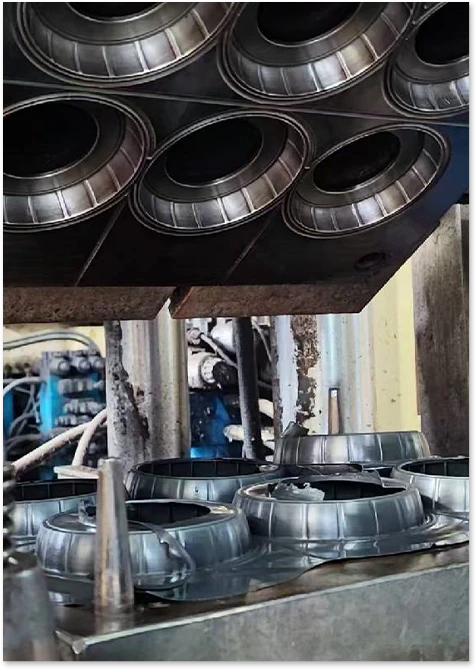
The performance of a metal lip seal is intrinsically linked to the material properties of its constituent components. The seal lip itself is predominantly manufactured from spring steels like AISI 1074 or 1095, chosen for their high elastic limit and fatigue resistance. Stainless steels (304, 316, 440C) are employed in corrosive environments, balancing mechanical strength with corrosion resistance. Specialized alloys like Hastelloy or Inconel find use in extreme temperature and chemical exposure scenarios. The casing, providing structural support, often utilizes carbon steel or ductile iron. The manufacturing process typically begins with blanking and forming the lip to its desired shape. Critical parameters during forming include maintaining precise lip angles (typically between 15-45 degrees) and ensuring consistent springback. Heat treatment, including hardening and tempering, is crucial for achieving the required spring force and wear resistance. Surface treatments such as nitriding or coating (e.g., chromium plating, PTFE coating) are frequently applied to enhance wear properties and reduce friction. The housing is often manufactured via investment casting or machining. Key parameter control focuses on dimensional accuracy, surface finish, and material homogeneity. Welding processes used for joining components must be carefully controlled to avoid distortion and maintain material integrity, employing techniques like TIG welding with shielded gases to prevent oxidation and ensure weld strength. Post-weld heat treatment is frequently employed to relieve stresses and improve ductility.
Performance & Engineering
The performance of a metal lip seal is governed by a complex interplay of forces and environmental factors. Force analysis focuses on the spring load applied by the lip, the hydrodynamic force generated by the rotating shaft, and the frictional forces resisting rotation. The hydrodynamic force increases with shaft speed and fluid viscosity, contributing to the seal’s ability to maintain contact. However, excessive speed can lead to hydrodynamic whirl, causing the seal to lose contact and leak. Environmental resistance is critical, particularly concerning temperature fluctuations, chemical exposure, and abrasive particle contamination. Thermal expansion and contraction of the seal and shaft can affect sealing performance. Chemical compatibility between the seal material and the fluid being sealed must be verified to prevent degradation or corrosion. Abrasive particles can cause wear and damage the sealing surface. Compliance requirements vary by industry. In the automotive sector, seals must meet standards for temperature resistance and fluid compatibility outlined by SAE International. In the aerospace industry, stringent requirements regarding material traceability and performance under extreme conditions are dictated by organizations like NASA and the FAA. Functional implementation involves careful consideration of shaft surface finish, housing bore tolerances, and lubrication. A smooth shaft surface minimizes friction and wear. Precise housing bore dimensions ensure proper seal interference and prevent leakage. Appropriate lubrication reduces friction, dissipates heat, and prevents premature wear.
Technical Specifications
| Parameter | Typical Value (Spring Steel Lip) | Typical Value (Stainless Steel Lip) | Unit |
|---|---|---|---|
| Maximum Operating Temperature | 150 | 250 | °C |
| Maximum Operating Pressure | 10 | 20 | MPa |
| Shaft Speed (Maximum) | 5000 | 8000 | RPM |
| Lip Interference | 0.05 - 0.15 | 0.05 - 0.15 | mm |
| Spring Rate | 5 – 15 | 5 – 15 | N/mm |
| Hardness (Lip) | HRC 50-60 | HRC 45-55 |
Failure Mode & Maintenance
Metal lip seals, while robust, are susceptible to various failure modes. Fatigue cracking, induced by repeated stress cycles, is a common issue, particularly at the lip’s leading edge. Delamination, the separation of the lip coating, can occur due to poor adhesion or excessive wear. Degradation of the seal material, especially in corrosive environments, leads to loss of mechanical properties and leakage. Oxidation at high temperatures can cause embrittlement and reduced sealing effectiveness. Abrasive wear, caused by particulate contamination, results in a roughened sealing surface and eventual leakage. Failure analysis should include visual inspection for cracks, delamination, and corrosion. Metallurgical analysis can identify material defects or degradation. Surface profilometry can assess the extent of wear. Preventive maintenance is crucial. Regular inspection for signs of wear or damage should be conducted. Proper lubrication minimizes friction and heat. Filtration systems remove abrasive particles from the fluid. Regularly monitoring operating parameters (temperature, pressure, speed) helps identify potential issues early. If a seal fails, proper installation of the replacement is paramount, ensuring correct orientation, interference fit, and lubrication. Correct shaft surface finish is critical, and damaged shafts should be re-machined or replaced before installing a new seal.
Industry FAQ
Q: What is the impact of shaft runout on metal lip seal performance?
A: Shaft runout, or eccentricity, introduces cyclical variations in the seal’s contact pressure. Excessive runout can lead to premature wear, reduced sealing effectiveness, and ultimately, leakage. The seal must be able to accommodate a certain degree of runout, but exceeding this limit will compromise its performance. Proper shaft alignment and bearing condition are crucial for minimizing runout.
Q: How do I select the appropriate seal material for a specific fluid?
A: Material selection must consider the fluid’s chemical composition, temperature, and pressure. Consult compatibility charts that detail the resistance of various materials (spring steel, stainless steel, alloys) to different fluids. In corrosive environments, stainless steel or specialized alloys are often preferred. For high-temperature applications, alloys with high oxidation resistance are necessary.
Q: What role does lubrication play in metal lip seal longevity?
A: Lubrication is vital for reducing friction, dissipating heat, and preventing wear. The lubricant creates a thin film between the lip and the shaft, minimizing direct contact and reducing wear rates. The lubricant should be compatible with the seal material and the fluid being sealed. Insufficient lubrication can lead to rapid wear and seal failure.
Q: What are the common causes of lip seal chatter?
A: Lip seal chatter, or vibration, can be caused by several factors, including excessive shaft speed, inadequate lubrication, shaft runout, or a damaged sealing surface. Chatter can lead to premature wear and leakage. Identifying the root cause and addressing it – through lubrication optimization, shaft alignment, or seal replacement – is essential.
Q: Can metal lip seals be used in vacuum applications?
A: While generally not ideal, metal lip seals can be adapted for limited vacuum applications. Special considerations are required, such as using seals with low outgassing materials and ensuring proper venting to prevent pressure buildup behind the seal. Elastomeric O-rings are often used in conjunction with metal lip seals in vacuum applications to improve sealing performance.
Conclusion
Metal lip seals represent a highly engineered solution for dynamic sealing, offering robustness and reliability in demanding industrial applications. Their performance is dictated by a complex interplay of material science, manufacturing precision, and operational parameters. Understanding the principles governing their function – including force analysis, environmental resistance, and failure modes – is critical for proper selection, installation, and maintenance.
Continued advancements in materials and manufacturing techniques are driving improvements in metal lip seal performance. The development of new alloys with enhanced corrosion resistance and wear properties, combined with sophisticated surface treatments, extends seal life and expands their applicability to even more challenging environments. Proactive maintenance strategies and rigorous adherence to industry standards are vital for ensuring optimal performance and minimizing downtime, ultimately maximizing the return on investment.