
Introduction
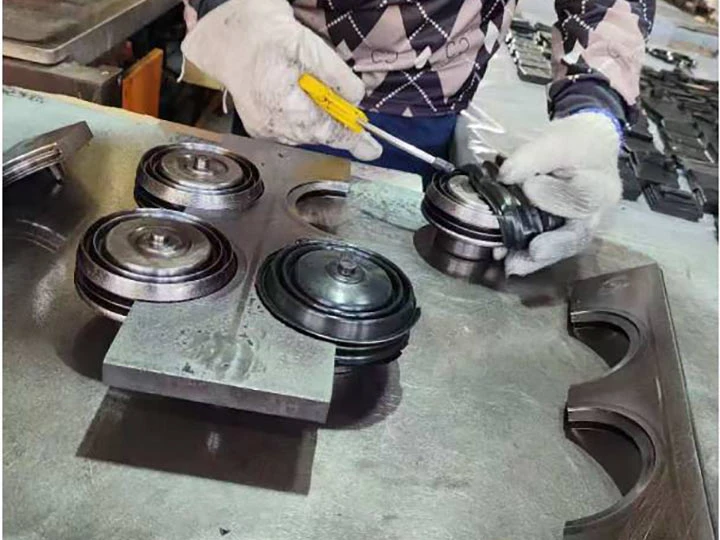
Stainless steel machining parts represent a critical component across a vast spectrum of industries, including aerospace, medical device manufacturing, oil and gas, and general industrial applications. Their prevalence stems from a unique combination of mechanical strength, corrosion resistance, and aesthetic appeal. This guide provides an in-depth technical analysis of these components, encompassing material science, manufacturing processes, performance characteristics, failure modes, and relevant industry standards. Stainless steels, characterized by a minimum chromium content of 10.5%, form a passive layer of chromium oxide on the surface, protecting the underlying material from corrosion. Machining these alloys, however, presents unique challenges due to their work hardening tendencies and varying compositions. This necessitates specialized tooling, cutting parameters, and post-processing techniques. The selection of the appropriate stainless steel grade and machining strategy is paramount to achieving the desired performance and longevity of the final component. Understanding the intricacies of their behavior is crucial for engineers, procurement specialists, and manufacturers aiming for optimal performance and cost-effectiveness.
Material Science & Manufacturing
Stainless steel alloys are broadly categorized into austenitic, ferritic, martensitic, and duplex families, each possessing distinct chemical compositions and mechanical properties. Austenitic stainless steels (e.g., 304, 316) contain high levels of chromium and nickel, imparting excellent corrosion resistance and weldability, but lower strength. Ferritic stainless steels (e.g., 430) offer good ductility and corrosion resistance at a lower cost, but are generally not heat treatable. Martensitic stainless steels (e.g., 410) can be hardened through heat treatment, providing high strength and wear resistance, but exhibit lower corrosion resistance. Duplex stainless steels combine the properties of austenitic and ferritic grades, offering both high strength and superior corrosion resistance. The manufacturing of stainless steel machining parts typically involves processes such as casting, forging, and crucially, machining. Machining operations commonly include turning, milling, drilling, and grinding. Work hardening, a significant challenge with stainless steels, occurs due to the material's plastic deformation during machining, increasing hardness and making further cutting more difficult. Mitigation strategies include utilizing sharp cutting tools, employing appropriate cutting fluids (often sulfur-based for free-machining grades), and optimizing cutting parameters (speed, feed, depth of cut). Electrochemical Machining (ECM) and Electrical Discharge Machining (EDM) are frequently employed for complex geometries or hardened materials where conventional machining proves impractical. Post-machining processes, like passivation and electropolishing, are critical for enhancing corrosion resistance by removing surface contaminants and promoting the formation of a stable passive layer. The control of chemical composition during alloy production, especially the precise ratios of chromium, nickel, molybdenum, and carbon, is paramount to ensure the desired mechanical and corrosion-resistant properties.
Performance & Engineering
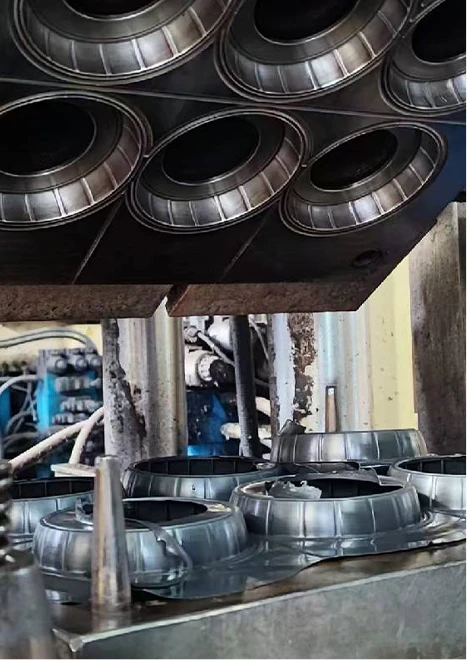
The performance of stainless steel machining parts is dictated by several factors, including tensile strength, yield strength, elongation, hardness, and corrosion resistance. Force analysis is essential during design to ensure the component can withstand applied loads without failure. Finite Element Analysis (FEA) is frequently employed to simulate stress distributions and predict component behavior under various loading conditions. Environmental resistance, particularly to corrosion, is a critical consideration. The specific environment (e.g., seawater, acidic solutions, high-temperature steam) dictates the appropriate stainless steel grade. Pitting corrosion, crevice corrosion, and stress corrosion cracking are common failure mechanisms that must be addressed through material selection, surface treatment, and design considerations. Compliance requirements, such as those stipulated by FDA (for medical devices) or ASME (for pressure vessels), necessitate thorough material traceability and adherence to stringent quality control procedures. Functional implementation details, such as tolerances, surface finish, and dimensional accuracy, influence the overall performance and reliability of the component. For example, precise tolerances are critical for mating components in precision instruments, while a smooth surface finish minimizes friction and wear. The thermal expansion coefficient of stainless steel also influences design, particularly in assemblies involving dissimilar materials. Proper allowance for thermal expansion is crucial to prevent stress build-up and potential failure.
Technical Specifications
| Stainless Steel Grade | Tensile Strength (MPa) | Yield Strength (MPa) | Elongation (%) | Corrosion Resistance (ASTMG48, Salt Spray) | Hardness (Rockwell C) |
|---|---|---|---|---|---|
| 304/304L | 517-724 | 205-276 | 30-45 | Excellent | 85-100 |
| 316/316L | 586-862 | 248-345 | 25-40 | Superior | 88-104 |
| 410 | 517-724 | 276-345 | 15-25 | Moderate | 85-110 (Hardened) |
| 430 | 483-586 | 241-310 | 30-40 | Good | 85-100 |
| 2205 (Duplex) | 780-930 | 483-620 | 20-25 | Outstanding | 95-110 |
| 17-4 PH | 896-1034 | 620-758 | 10-15 | Excellent | 95-115 (Hardened) |
Failure Mode & Maintenance
Stainless steel machining parts are susceptible to various failure modes, including fatigue cracking, pitting corrosion, crevice corrosion, stress corrosion cracking, and galling. Fatigue cracking occurs under cyclic loading, initiating at stress concentrators such as sharp corners or surface defects. Pitting corrosion is localized corrosion caused by chloride ions, forming small pits on the surface. Crevice corrosion occurs in confined spaces where stagnant fluids accumulate. Stress corrosion cracking is the combined effect of tensile stress and a corrosive environment. Galling is a form of wear that occurs between mating surfaces, especially under high loads and low lubrication. Preventative maintenance is critical for extending component life. Regular inspection for cracks, corrosion, and wear is essential. Lubrication is crucial to minimize friction and wear, especially in sliding or rotating components. Surface treatments, such as passivation and coating, can enhance corrosion resistance. Proper cleaning procedures should be implemented to remove contaminants that can accelerate corrosion. For critical applications, non-destructive testing methods, such as ultrasonic testing or radiography, can detect internal flaws before they lead to catastrophic failure. The root cause analysis of failures is crucial to identify and address underlying issues, preventing recurrence. Regular torque checks for bolted joints are also crucial to maintain preload and prevent loosening.
Industry FAQ
Q: What are the key considerations when selecting a stainless steel grade for a marine environment?
A: For marine environments, the primary concern is chloride-induced corrosion. Austenitic grades like 316 and super-austenitic alloys such as 6Mo stainless steels are preferred due to their superior pitting and crevice corrosion resistance. Duplex stainless steels also offer excellent performance. Avoid ferritic and martensitic grades as they are more susceptible to corrosion in saltwater.
Q: How does heat treatment affect the machinability of stainless steel?
A: Heat treatment significantly affects machinability. Annealing softens the steel, improving machinability but reducing strength. Hardening increases strength and wear resistance but makes machining more difficult. Solution annealing followed by rapid cooling is often used to optimize the balance between machinability and mechanical properties.
Q: What type of cutting fluid is recommended for machining stainless steel?
A: Sulfur-based cutting fluids are generally recommended for machining stainless steel, particularly free-machining grades. These fluids promote chip breakage and reduce built-up edge, improving surface finish and tool life. However, compatibility with the specific stainless steel grade and environmental regulations should be considered.
Q: What is passivation, and why is it important for stainless steel parts?
A: Passivation is a chemical treatment that removes free iron from the surface of stainless steel, enhancing the formation of a protective chromium oxide layer. This layer significantly improves corrosion resistance. It is crucial for ensuring optimal performance in corrosive environments and is often required for applications in the medical and food processing industries.
Q: What are the common causes of galling in stainless steel fasteners and how can it be prevented?
A: Galling occurs due to adhesive wear between mating stainless steel surfaces under high loads and low lubrication. It can be prevented by using dissimilar metals, applying anti-seize compounds, employing surface treatments like nitriding, or increasing the fastener preload to reduce relative movement.
Conclusion
Stainless steel machining parts represent a versatile and essential material in numerous industries. Their inherent corrosion resistance, coupled with tunable mechanical properties, makes them ideal for demanding applications. However, successful utilization requires a thorough understanding of the material science, manufacturing challenges, and potential failure modes. Careful selection of the appropriate stainless steel grade, optimized machining parameters, and proper surface treatments are crucial for achieving desired performance and longevity.
Future advancements in stainless steel alloy development, coupled with the adoption of advanced machining technologies like laser machining and micro-machining, will further enhance the capabilities of these components. Continued research into corrosion mitigation techniques and non-destructive testing methods will also contribute to improved reliability and extended service life. By embracing a comprehensive, technically informed approach, engineers and manufacturers can unlock the full potential of stainless steel machining parts and drive innovation across diverse industries.