
Introduction
Structural steel washers are critical load-distributing components used in conjunction with bolts and nuts to ensure secure and reliable connections in a vast array of engineering applications. Their primary function is to prevent loosening of the bolted joint, protect the connected surfaces from damage by the bolt or nut bearing directly on them, and provide even stress distribution. Positioned between the fastener head (or nut) and the substrate, washers mitigate the effects of surface imperfections and prevent embedding of the fastener, maintaining consistent clamping force. In the broader construction and industrial sectors, they are indispensable for maintaining structural integrity across diverse applications, including bridges, buildings, machinery, and pipelines. Their selection is dictated by factors such as load requirements, environmental conditions, and the materials being joined, with proper specification paramount for long-term performance and safety. This guide provides a detailed technical overview of structural steel washers, encompassing material science, manufacturing processes, performance characteristics, failure modes, and relevant industry standards.
Material Science & Manufacturing
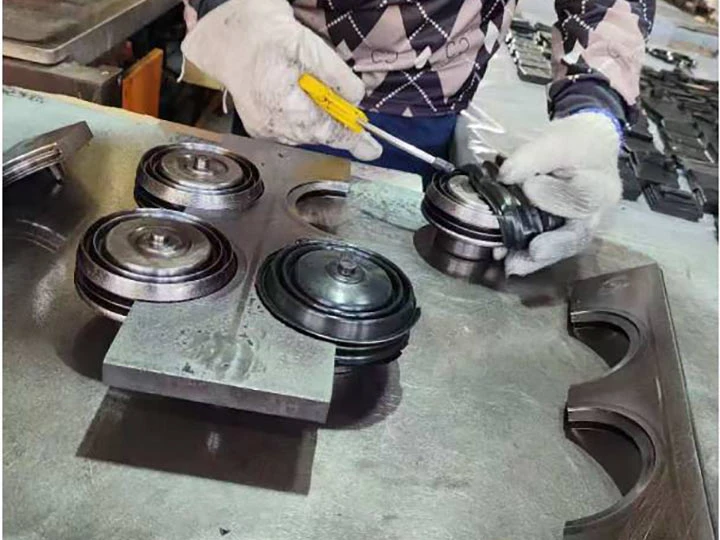
Structural steel washers are typically manufactured from medium carbon steel grades, conforming to specifications like ASTM A36 or equivalent EN 10025-2 S235JR. The inherent properties of these steels – high tensile strength, ductility, and weldability – make them well-suited for load-bearing applications. Chemical composition generally includes iron as the base element, with controlled percentages of carbon (0.25-0.35%), manganese (0.60-0.90%), silicon (0.05-0.30%), phosphorus (0.040% max), and sulfur (0.035% max). These alloying elements contribute to the steel’s mechanical properties; manganese enhances strength and hardenability, while silicon improves its oxidation resistance. Manufacturing processes typically involve blanking or stamping from steel sheets or coils. Blanking utilizes a die to shear the washer shape from the sheet, resulting in a relatively clean cut and minimal material waste. Stamping, employing a progressive die, allows for more complex washer geometries, including those with features like serrations or chamfers. Following blanking or stamping, washers undergo secondary operations such as hole punching, deburring, and potentially surface treatment. Heat treatment processes, like quenching and tempering, can further refine the steel’s hardness and toughness. Precise control of process parameters - blanking force, die clearance, stamping speed, and heat treatment temperatures – is critical to ensure consistent dimensional accuracy, mechanical properties, and surface finish. The microstructure of the steel, specifically grain size and inclusion content, is also closely monitored as it directly impacts fatigue resistance and fracture toughness.
Performance & Engineering
The performance of structural steel washers is fundamentally governed by their ability to withstand applied loads and maintain clamping force over time. Key engineering considerations include tensile strength, yield strength, hardness, and fatigue resistance. Tensile strength, typically ranging from 400-550 MPa for A36 steel, determines the washer's resistance to breaking under tension. Yield strength (around 250 MPa for A36) defines the point at which the washer begins to deform permanently. Hardness, measured using Rockwell or Brinell scales, correlates to wear resistance and resistance to surface indentation. Fatigue resistance is paramount in applications subjected to cyclic loading. Force analysis involves calculating the stress distribution within the washer under load, taking into account factors such as bolt tension, external forces, and the geometry of the connected surfaces. Finite element analysis (FEA) is frequently employed to optimize washer design and predict stress concentrations. Environmental resistance is another crucial aspect. Washers exposed to corrosive environments may require protective coatings, such as zinc plating, galvanization, or epoxy powder coating, to prevent oxidation and maintain their structural integrity. Compliance with relevant building codes and industry standards (e.g., AISC, ASTM) is mandatory, dictating minimum material properties, dimensional tolerances, and performance requirements. The washer’s ability to maintain preload in the bolted joint is vital; loss of preload due to relaxation or creep can lead to joint failure. Proper washer selection and tightening torque application are essential for ensuring long-term joint reliability.
Technical Specifications
| Material Grade | Tensile Strength (MPa) | Yield Strength (MPa) | Hardness (Rockwell B) |
|---|---|---|---|
| ASTM A36 | 400 - 550 | 250 | 85 - 100 |
| SAE 1045 Steel | 560 - 700 | 310 | 95 - 115 |
| EN 10025-2 S235JR | 360 - 450 | 235 | 75 - 90 |
| Stainless Steel 304 | 500 - 700 | 205 | 85 - 100 |
| Stainless Steel 316 | 580 - 750 | 240 | 90 - 105 |
| High Strength Steel (A570 Gr. 50) | 500 | 345 | 100-115 |
Failure Mode & Maintenance
Structural steel washers are susceptible to several failure modes, depending on the application and environmental conditions. Corrosion is a primary concern, particularly in exposed environments. Rust formation weakens the material and reduces its load-carrying capacity. Fatigue cracking can occur under cyclic loading, initiating at stress concentrations (e.g., around the hole or at the washer’s edge) and propagating until the washer fractures. Brinelling, or permanent deformation, can occur if the washer is subjected to excessive load, causing indentation of the bearing surface. Another failure mode is yielding, where the washer permanently deforms under load, compromising the clamping force. Improper installation, such as over-tightening or using incorrect washers for the application, can also contribute to failure. Maintenance involves regular inspection for signs of corrosion, cracking, or deformation. Protective coatings should be reapplied as needed to maintain corrosion resistance. Worn or damaged washers should be replaced immediately to prevent joint failure. Lubrication of the bolt and nut threads can reduce friction and prevent galling, extending the life of the entire assembly. Implementing a preventative maintenance schedule that includes torque checks can help identify and address potential issues before they lead to catastrophic failure. Analysis of failed washers can provide valuable insights into the root cause of the failure and inform improvements to washer design or material selection.
Industry FAQ
Q: What is the impact of washer size (outer diameter) on load distribution?
A: A larger outer diameter washer distributes the load over a wider area of the connected surfaces, reducing the bearing stress and minimizing the risk of surface deformation or crushing. This is particularly critical for softer materials or when dealing with thin-walled components. A smaller diameter washer concentrates the load, which can lead to localized failure.
Q: How does the material of the washer affect its performance in corrosive environments?
A: Carbon steel washers are prone to corrosion in humid or chemically aggressive environments. Stainless steel washers (304 or 316) offer significantly improved corrosion resistance. Galvanized or coated washers provide a sacrificial layer of protection. The choice of material depends on the severity of the environment and the required lifespan of the assembly.
Q: What is the difference between flat washers and lock washers, and when should each be used?
A: Flat washers primarily serve as load distribution and surface protection devices. Lock washers are designed to prevent loosening of the bolted joint. Common types of lock washers include split lock washers (which create friction), tooth lock washers (which bite into the connected surfaces), and spring lock washers (which provide a resilient locking force). Lock washers are essential in applications subject to vibration or dynamic loading.
Q: What torque should be applied to bolts when using structural steel washers?
A: The appropriate torque depends on the bolt size, material, and grade, as well as the washer material and surface finish. Torque specifications are typically provided by the bolt manufacturer or in relevant engineering standards. Using a calibrated torque wrench is crucial to ensure accurate and consistent tightening.
Q: What are the key considerations when selecting a washer for high-temperature applications?
A: High temperatures can reduce the strength and hardness of steel washers. Stainless steel alloys retain their mechanical properties at elevated temperatures better than carbon steel. Consideration should also be given to thermal expansion coefficients and the potential for oxidation or scaling. Specialized high-temperature alloys may be necessary for extreme conditions.
Conclusion
Structural steel washers are deceptively simple yet fundamentally critical components in a wide spectrum of engineering applications. Their performance directly impacts the integrity and longevity of bolted joints. Careful consideration must be given to material selection, manufacturing processes, and performance characteristics, including tensile strength, yield strength, and resistance to environmental degradation. Understanding potential failure modes—from corrosion and fatigue to brinneling—is vital for implementing effective maintenance strategies and preventing catastrophic failures.
Moving forward, advancements in washer design and materials science will focus on enhancing performance in demanding environments. This includes the development of novel coatings for improved corrosion resistance, high-strength alloys for increased load-bearing capacity, and smart washers incorporating sensors for real-time monitoring of preload and stress levels. Adherence to stringent industry standards and a commitment to rigorous quality control will remain paramount for ensuring the reliability and safety of structural steel washer applications.