
Introduction
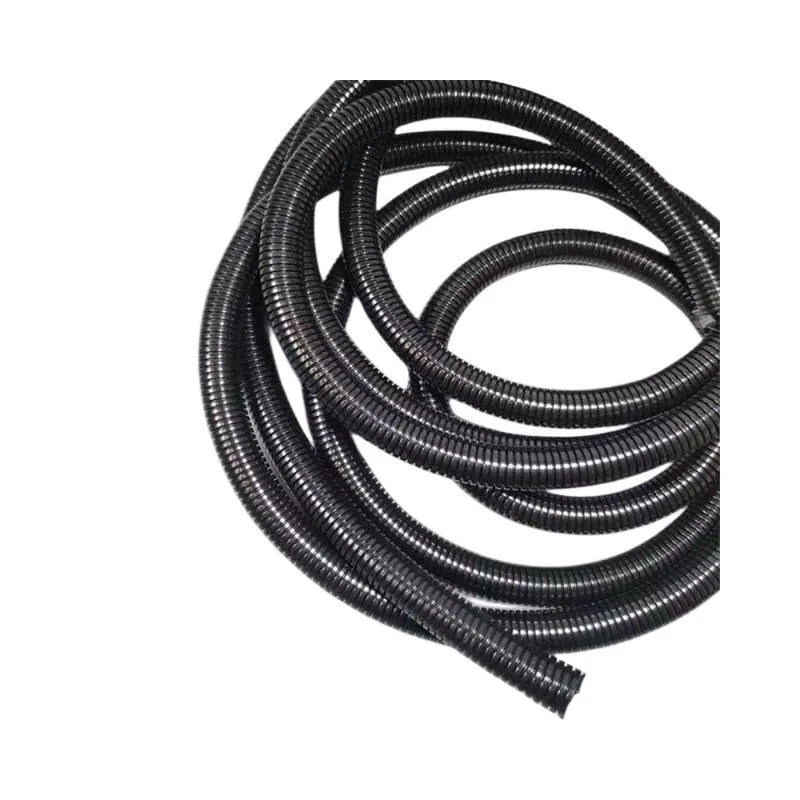
3/4 inch corrugated plastic hose is a flexible, lightweight conduit primarily utilized for the protection and routing of electrical wiring, pneumatic lines, and various fluid transfer applications. Its construction, typically from polyethylene (PE) or polypropylene (PP), provides a robust yet pliable solution commonly found in construction, automotive, agricultural, and industrial settings. The corrugated design allows for significant bending radius without kinking or compromising structural integrity, making it adaptable to complex installations. Crucially, this hose distinguishes itself from rigid conduit through ease of installation and modification, albeit with considerations regarding crush resistance and UV stability depending on material composition. This guide details the material science, manufacturing processes, performance characteristics, potential failure modes, and relevant industry standards associated with 3/4 inch corrugated plastic hose.
Material Science & Manufacturing
The primary raw materials for 3/4 inch corrugated plastic hose are polyethylene (PE) – encompassing Low-Density Polyethylene (LDPE), Linear Low-Density Polyethylene (LLDPE), and High-Density Polyethylene (HDPE) – and polypropylene (PP). LDPE offers excellent flexibility and low-temperature performance but lower tensile strength. LLDPE provides enhanced tensile strength and puncture resistance compared to LDPE. HDPE boasts superior rigidity, chemical resistance, and temperature tolerance, however, at the cost of reduced flexibility. PP exhibits good chemical resistance, higher temperature resistance than PE, and good fatigue resistance, making it suitable for applications involving repeated bending. The choice of material dictates the hose’s application scope.
Manufacturing typically involves extrusion. Plastic resin is melted and forced through a circular die, forming a continuous tube. This tube then passes through a corrugating unit, consisting of multiple rollers with grooves, which impart the characteristic corrugated profile. Critical parameters during extrusion include melt temperature, screw speed, die pressure, and cooling rate. Maintaining consistent melt temperature is crucial for preventing material degradation and ensuring uniform wall thickness. Screw speed influences the output rate and mixing quality. Precise control of the cooling process is vital to prevent warping and maintain dimensional accuracy. Following corrugation, the hose is often subjected to sizing and cutting operations. Further processing might involve UV stabilization via additive incorporation during extrusion, enhancing resistance to degradation from sunlight exposure. Post-extrusion, quality control involves dimensional checks (inner/outer diameter, wall thickness, corrugation pitch), tensile strength testing, and visual inspection for defects.
Performance & Engineering
The performance of 3/4 inch corrugated plastic hose is fundamentally governed by its mechanical and environmental resistance properties. Crush resistance is a critical factor, especially in applications where the hose is subject to external loads. This is directly correlated to the corrugation profile – a deeper corrugation generally offers higher crush resistance but may reduce flexibility. Tensile strength, determined by the chosen polymer, dictates the hose's ability to withstand pulling forces without rupture. Bending radius is another crucial parameter, impacting the hose's ability to navigate tight spaces without kinking or compromising its integrity. Environmental resistance includes UV stability (resistance to degradation from sunlight), chemical resistance (compatibility with fluids being conveyed), and temperature tolerance.
Engineering calculations often involve assessing hoop stress (stress in the circumferential direction due to internal pressure) and longitudinal stress (stress along the axis of the hose). For fluid transfer applications, burst pressure must be accurately determined, considering factors like wall thickness, material properties, and safety factors. In electrical applications, dielectric strength (the ability to withstand electrical stress without breakdown) is paramount. Compliance requirements often dictate specific performance criteria, such as flame retardancy (UL 94 V-0 rating is common for electrical applications) and RoHS compliance (restriction of hazardous substances). Static electricity dissipation may also be critical in certain environments, necessitating the use of conductive additives in the plastic formulation.
Technical Specifications
| Parameter | LDPE (Typical) | LLDPE (Typical) | HDPE (Typical) | Polypropylene (Typical) |
|---|---|---|---|---|
| Inner Diameter (inches) | 0.68 | 0.68 | 0.68 | 0.68 |
| Outer Diameter (inches) | 0.84 | 0.84 | 0.84 | 0.84 |
| Wall Thickness (inches) | 0.08 | 0.08 | 0.09 | 0.08 |
| Tensile Strength (PSI) | 1,600 | 2,200 | 3,000 | 3,500 |
| Crush Resistance (lbs/inch) | 400 | 500 | 600 | 550 |
| Operating Temperature (°F) | -50 to 140 | -40 to 180 | -40 to 220 | 32 to 212 |
Failure Mode & Maintenance
Common failure modes for 3/4 inch corrugated plastic hose include cracking due to fatigue (repeated bending), splitting caused by excessive tension or impact, and degradation from UV exposure. Environmental stress cracking (ESC) can occur when the hose is exposed to certain chemicals under tensile stress, leading to premature failure. Kinking, resulting from exceeding the minimum bending radius, can permanently deform the hose and restrict flow. Over time, plasticizers in some formulations can leach out, causing the hose to become brittle and lose its flexibility. Thermal degradation, especially at elevated temperatures, can lead to loss of mechanical properties.
Maintenance primarily focuses on preventative measures. Avoid exceeding the specified bending radius and tensile load limits. Protect the hose from prolonged exposure to direct sunlight and harsh chemicals. Regularly inspect the hose for signs of cracking, splitting, or discoloration. Cleaning can be performed with mild soap and water; avoid using abrasive cleaners or solvents that can damage the plastic. If damage is detected, the affected section should be replaced immediately. Proper storage in a cool, dry, and dark location can extend the hose’s service life. For applications involving critical fluids, periodic pressure testing is recommended to detect any leaks or weaknesses.
Industry FAQ
Q: What is the primary difference between LDPE and LLDPE corrugated hose regarding suitability for outdoor applications?
A: LLDPE offers significantly improved UV resistance compared to LDPE. While both will degrade with prolonged sun exposure, LLDPE exhibits a slower degradation rate, making it preferable for outdoor installations. UV stabilization additives can further enhance the UV resistance of both materials, but LLDPE’s inherent resistance is higher.
Q: Can 3/4 inch corrugated plastic hose be used for compressed air lines, and what considerations apply?
A: Yes, it can be used, but pressure ratings must be carefully considered. Standard corrugated hose is typically suitable for low-pressure applications. For compressed air, reinforcing layers or higher-density materials (HDPE or PP) are recommended to withstand the increased pressure. Ensure the hose is rated for the maximum operating pressure of the compressed air system and that all connections are secure and leak-free.
Q: What is the impact of temperature on the performance of polypropylene corrugated hose?
A: Polypropylene exhibits good temperature resistance, but its mechanical properties can change significantly with temperature fluctuations. At lower temperatures, it may become more brittle, increasing the risk of cracking. At higher temperatures, it can lose some of its rigidity and become more susceptible to creep (slow deformation under sustained load). The operating temperature range specified by the manufacturer should always be adhered to.
Q: How does the corrugation profile affect the crush resistance and flexibility of the hose?
A: A deeper corrugation profile generally provides higher crush resistance because it creates a more robust structure that can withstand external loads. However, a deeper corrugation typically reduces flexibility, making it more difficult to bend the hose around tight corners. The optimal corrugation profile is a trade-off between crush resistance and flexibility, depending on the specific application requirements.
Q: What standards relate to the flame retardancy of corrugated plastic hose used in electrical applications?
A: UL 94 V-0 is a common standard for flame retardancy in electrical applications. This standard specifies that a burning sample must self-extinguish within 10 seconds. Other relevant standards include IEC 60332-1-2 for testing flame propagation on cables and wires, and local building codes that may have specific requirements for flame retardancy of electrical conduits.
Conclusion
3/4 inch corrugated plastic hose offers a versatile solution for conduit and fluid transfer needs, characterized by its adaptability, lightweight nature, and cost-effectiveness. The selection of appropriate material – LDPE, LLDPE, HDPE, or PP – is crucial, dictated by the specific application demands relating to temperature, chemical exposure, tensile strength, and UV stability. Understanding the manufacturing processes and associated quality control parameters ensures consistent product performance.
Effective maintenance, including regular inspection and adherence to specified operating limits, is critical to mitigating failure modes like cracking, splitting, and degradation. Compliance with relevant industry standards – UL, IEC, and RoHS – guarantees safety and regulatory adherence. Ongoing advancements in polymer technology continue to enhance the performance characteristics of corrugated plastic hose, expanding its applicability across a wider range of industrial sectors.