
Introduction
The 3/8 inch rubber hose elbow is a critical fluid conveyance component utilized across numerous industrial applications, including automotive, agriculture, industrial machinery, and fluid power systems. This fitting facilitates directional changes in rubber hose routing, accommodating system layouts where straight connections are impractical. Its core function revolves around maintaining fluid integrity while withstanding pressure, temperature variations, and exposure to diverse chemical environments. The performance of a 3/8 inch rubber hose elbow is defined by its burst pressure, temperature range, chemical compatibility, and dimensional accuracy. Failures can lead to costly downtime, environmental hazards, and safety concerns, making material selection and quality control paramount. This guide provides a comprehensive technical overview of 3/8 inch rubber hose elbows, covering material science, manufacturing processes, performance characteristics, failure modes, and relevant industry standards.
Material Science & Manufacturing
3/8 inch rubber hose elbows are typically constructed from a combination of materials: an elastomeric rubber compound forming the hose body, and a reinforcing layer (often textile or wire braiding) to enhance pressure resistance. Common rubber compounds include Nitrile (NBR), Ethylene Propylene Diene Monomer (EPDM), and Chloroprene (Neoprene). NBR offers excellent oil resistance but limited temperature range. EPDM excels in high-temperature and weathering applications, demonstrating robust resistance to ozone and UV degradation. Neoprene provides a balance of properties, including moderate oil and chemical resistance, alongside good abrasion resistance. The reinforcement layer, usually comprised of polyester or aramid fibers, contributes significantly to burst strength and prevents hose kinking.
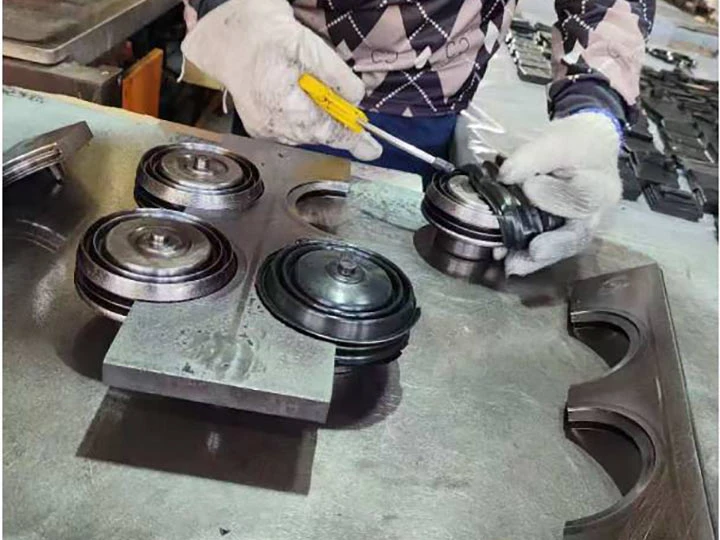
Manufacturing involves several key steps. First, the rubber compound is mixed and molded into a preform. The reinforcement layer is then applied, often through a spiraling or braiding process. Next, the elbow shape is formed utilizing injection molding or compression molding, applying controlled temperature and pressure. Critical parameters during molding include temperature uniformity (to prevent localized degradation), cure time (influencing crosslinking density), and mold pressure (determining dimensional accuracy). Post-molding processes involve trimming excess material, surface inspection, and pressure testing to verify integrity. The selection of mold material (typically hardened steel) and the implementation of efficient cooling systems are crucial for consistent product quality and cycle time optimization. Quality control measures include durometer hardness testing, tensile strength testing, and visual inspection for defects like porosity or inconsistencies in the reinforcement layer.
Performance & Engineering
The performance of a 3/8 inch rubber hose elbow is dictated by its ability to withstand internal pressure, external forces, and environmental factors. Force analysis considers hoop stress (generated by internal pressure), axial stress (due to end loads), and bending stress (when the elbow is subjected to angular deflection). The reinforcing layer plays a pivotal role in mitigating hoop stress, preventing hose rupture. The bend radius of the elbow significantly affects stress concentration; a tighter bend radius increases the risk of fatigue cracking.
Environmental resistance is crucial. Exposure to petroleum-based fluids, corrosive chemicals, and extreme temperatures can degrade the rubber compound, leading to swelling, embrittlement, or cracking. Compatibility charts specifying fluid resistance for different rubber compounds are essential for proper material selection. Compliance requirements vary depending on the application. Automotive applications often demand compliance with SAE J2044 standards for fuel hose assemblies. Industrial applications may require adherence to specific industry regulations regarding material traceability and chemical resistance. Furthermore, static electricity build-up can be a concern with certain fluids; therefore, conductive rubber compounds or grounding measures may be necessary. Proper installation is also critical; excessive tightening or misalignment can induce stress and reduce service life.
Technical Specifications
| Parameter | Unit | NBR (Nitrile) | EPDM |
|---|---|---|---|
| Inner Diameter | inch | 0.375 | 0.375 |
| Working Pressure | psi | 200 | 150 |
| Burst Pressure | psi | 600 | 450 |
| Temperature Range | °F | -40 to 212 | -40 to 250 |
| Reinforcement | - | Polyester Braid | Aramid Braid |
| Fluid Compatibility | - | Oil, Fuel, Water | Water, Glycol, Steam |
Failure Mode & Maintenance
Common failure modes for 3/8 inch rubber hose elbows include: fatigue cracking (due to repeated flexing), chemical degradation (resulting from incompatible fluids), abrasion (caused by internal flow or external contact), and age-related hardening/embrittlement. Fatigue cracking typically initiates at the inner radius of the bend due to stress concentration. Chemical degradation manifests as swelling, discoloration, or loss of elasticity. Abrasion is more prevalent in applications involving abrasive slurries or particulate matter. Age-related degradation occurs due to oxidation and UV exposure, leading to a reduction in mechanical properties.
Preventative maintenance includes regular visual inspections for cracks, bulges, or discoloration. Hoses should be replaced if any signs of degradation are observed. Proper storage conditions are essential; avoid exposure to direct sunlight, extreme temperatures, and ozone sources. Periodic pressure testing can identify weakened hoses before catastrophic failure. When disconnecting and reconnecting fittings, use appropriate tools and techniques to avoid damaging the hose end or reinforcement layer. Avoid over-tightening clamps, as this can induce stress and accelerate failure. Record-keeping of hose replacement dates and operating conditions can help identify recurring failure patterns and optimize maintenance schedules.
Industry FAQ
Q: What is the primary difference between NBR and EPDM rubber in the context of a 3/8 inch hose elbow application?
A: The key difference lies in fluid compatibility and temperature resistance. NBR exhibits superior resistance to oils and fuels, making it ideal for automotive fuel lines. However, its temperature range is limited. EPDM offers broader chemical resistance, particularly against weathering, ozone, and glycol-based fluids, and can withstand higher temperatures, making it suitable for radiator hoses and industrial coolant systems.
Q: How does the reinforcement layer impact the service life of a 3/8 inch rubber hose elbow?
A: The reinforcement layer significantly extends the service life by providing resistance to burst pressure and preventing hose collapse or kinking. Materials like polyester braid enhance tensile strength, while aramid braid offers even higher strength-to-weight ratio and improved flexibility. A properly constructed reinforcement layer distributes stress more evenly, reducing the likelihood of fatigue cracking.
Q: What are the critical considerations when selecting a 3/8 inch rubber hose elbow for a hydraulic system?
A: For hydraulic systems, burst pressure is the paramount consideration. The hose must withstand pressures significantly exceeding the system's operating pressure. Chemical compatibility with the hydraulic fluid is also crucial to prevent swelling or degradation of the rubber. Additionally, the hose should be rated for the operating temperature range of the hydraulic system.
Q: What visual cues indicate that a 3/8 inch rubber hose elbow needs to be replaced?
A: Obvious signs include cracks, bulges, or discoloration of the rubber. Softening or hardening of the rubber is also indicative of degradation. Any visible damage to the reinforcement layer, such as fraying or corrosion, warrants immediate replacement. If the hose exhibits signs of leaking, even small amounts, it should be replaced immediately.
Q: What is the impact of bend radius on the performance and longevity of a rubber hose elbow?
A: A smaller bend radius increases stress concentration at the inner radius of the bend, making the elbow more susceptible to fatigue cracking. A larger bend radius distributes stress more evenly, extending service life. Manufacturers typically specify a minimum bend radius to avoid premature failure. Adhering to this specification is critical during installation.
Conclusion
The 3/8 inch rubber hose elbow, despite its seemingly simple construction, represents a complex interplay of material science, manufacturing precision, and engineering considerations. Its optimal performance and longevity are predicated on careful material selection, adherence to rigorous manufacturing standards, and proper maintenance practices. Understanding the nuances of rubber compounds, reinforcement materials, and potential failure modes is critical for procurement professionals and engineers alike.
Moving forward, advancements in rubber technology and reinforcement techniques will likely lead to hose elbows with enhanced pressure resistance, improved chemical compatibility, and extended service lives. The integration of sensor technology for real-time monitoring of hose condition is also a potential area for future development. Ultimately, a proactive approach to material selection, installation, and maintenance will remain paramount for ensuring the reliable and safe operation of fluid conveyance systems utilizing 3/8 inch rubber hose elbows.