
Introduction
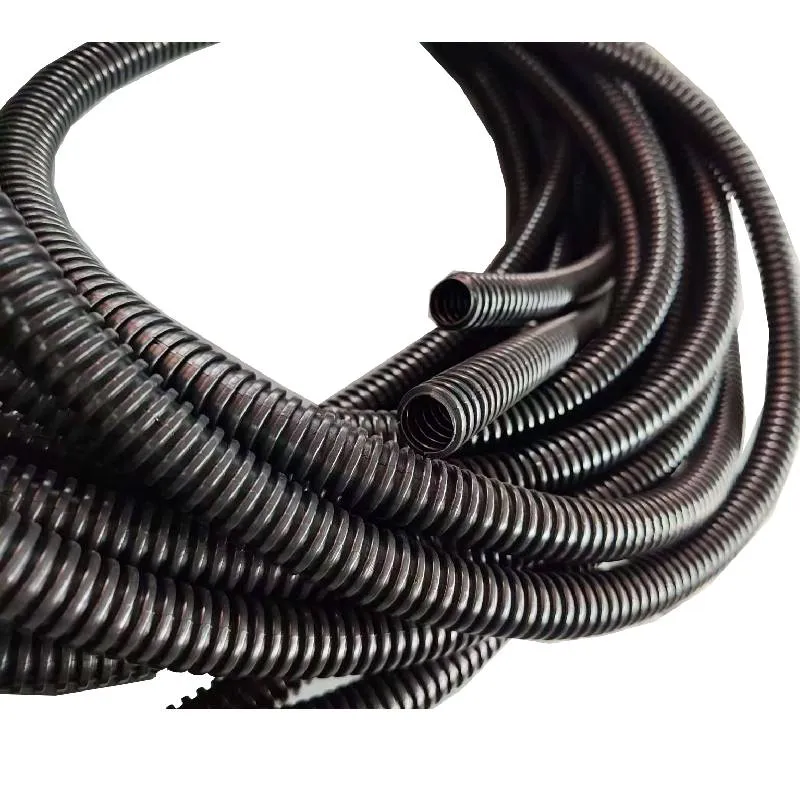
36-inch corrugated plastic pipe (CPP) is a widely utilized drainage solution in civil engineering, agricultural, and industrial applications. Typically manufactured from polyethylene high-density (HDPE) or polypropylene (PP), it provides a lightweight, durable, and cost-effective alternative to traditional concrete or metal piping systems. Its primary function revolves around subsurface drainage – efficiently conveying stormwater, wastewater, and irrigation runoff. Positioned within the broader infrastructure chain, CPP represents a critical component following excavation and preceding discharge or treatment facilities. Core performance characteristics center around hydraulic capacity, structural integrity under load (soil cover), and resistance to chemical degradation and environmental stress cracking. The industry consistently faces challenges related to long-term durability in aggressive soil environments, ensuring proper installation to prevent deformation, and meeting increasingly stringent regulatory requirements for stormwater management and environmental protection.
Material Science & Manufacturing
The dominant material for 36-inch corrugated plastic pipe is HDPE, selected for its high strength-to-density ratio, flexibility, and resistance to many chemicals. PP is also used, particularly where higher temperature resistance is required. HDPE resin exhibits a semi-crystalline structure, imparting toughness and resistance to impact. Raw material specifications dictate parameters such as melt flow index (MFI), density, and carbon black content (for UV protection). Manufacturing predominantly utilizes the extrusion process. HDPE or PP pellets are fed into an extruder where they are heated, melted, and forced through a circular die to create a continuous pipe profile. This profile is then corrugated using a series of rollers that impart the characteristic ribbed structure. Critical parameters during extrusion include die temperature, extrusion rate, and cooling rate, all influencing the pipe's dimensional accuracy and mechanical properties. The corrugated profile is crucial for ring stiffness, a key indicator of the pipe’s ability to withstand external loads. Proper cooling is essential to prevent warping and ensure dimensional stability. Quality control measures involve regular testing of material properties (tensile strength, impact resistance) and dimensional measurements (diameter, corrugation height, wall thickness).
Performance & Engineering
The performance of 36-inch corrugated plastic pipe is governed by several engineering principles. Structural integrity is primarily evaluated through ring stiffness testing (ASTM D2412), which determines the pipe's ability to resist deformation under vertical loads representing soil cover. Hydrostatic pressure testing (ASTM D1597) assesses the pipe's resistance to internal pressure, simulating filled conditions. Hydraulic performance is determined by Manning’s equation, factoring in pipe diameter, roughness coefficient, and slope to calculate flow capacity. Long-term performance is significantly impacted by creep – the gradual deformation of the plastic material under sustained load. Soil-structure interaction is a critical consideration; the surrounding soil provides support, but also exerts pressure. Environmental resistance is evaluated through accelerated aging tests (ASTM D1436) simulating UV exposure and thermal cycling. Compliance requirements vary regionally, often referencing local drainage ordinances and environmental regulations pertaining to stormwater management. Specific applications, such as detention basins or infiltration trenches, necessitate careful analysis of soil permeability, groundwater levels, and potential for siltation. Furthermore, proper jointing techniques – typically using couplers or bell-and-spigot connections – are vital for maintaining hydraulic integrity and preventing infiltration.
Technical Specifications
| Parameter | Unit | HDPE (Typical) | PP (Typical) |
|---|---|---|---|
| Nominal Diameter | inches | 36 | 36 |
| Ring Stiffness | psi | 55-75 | 60-80 |
| Tensile Strength | psi | 4,000-5,000 | 5,000-6,000 |
| Impact Resistance (Izod Notched) | ft-lb/in | 10-15 | 12-18 |
| Manning’s Roughness Coefficient (n) | - | 0.012 | 0.013 |
| Operating Temperature Range | °F | -40 to 180 | -20 to 195 |
Failure Mode & Maintenance
36-inch corrugated plastic pipe can experience several failure modes in service. Fatigue cracking can occur due to repeated loading and unloading, particularly in areas of stress concentration (e.g., joints). Environmental stress cracking (ESC) is induced by prolonged exposure to aggressive chemicals in the soil, leading to brittle failure. UV degradation can embrittle the plastic, particularly if the pipe is exposed to sunlight for extended periods. Ovalization, or deformation of the pipe's circular cross-section, can result from excessive soil load or improper installation. Joint failures are common, arising from inadequate coupling or improper sealing. Maintenance typically involves periodic inspection for signs of damage (cracks, deformation, leaks). Preventative measures include ensuring proper soil compaction around the pipe, avoiding heavy loads over the pipe's alignment, and implementing erosion control measures to prevent soil washout. Repair options range from localized patching of cracks to complete pipe replacement. For ESC failures, soil analysis is critical to identify the causative agents and implement mitigation strategies (e.g., soil stabilization, use of more chemically resistant pipe materials). Regular cleaning to remove debris and sediment is also important to maintain hydraulic capacity.
Industry FAQ
Q: What is the maximum allowable soil cover for a 36-inch HDPE CPP with a ring stiffness of 60 psi?
A: The maximum allowable soil cover depends on the pipe’s loading capacity and the soil’s properties. Generally, a ring stiffness of 60 psi allows for up to 15-20 feet of cover, assuming properly compacted granular backfill. However, site-specific geotechnical analysis is crucial to confirm this, considering factors like soil density, moisture content, and the presence of groundwater.
Q: How does the corrugated profile contribute to the pipe’s structural performance?
A: The corrugated profile significantly enhances the pipe’s ring stiffness and resistance to buckling under external loads. The ribs act as reinforcing elements, distributing the load more evenly and preventing deformation. Without the corrugations, the pipe would be significantly less capable of withstanding soil pressure.
Q: What are the primary chemical resistance considerations when selecting CPP for a specific application?
A: The chemical resistance of HDPE and PP are generally good for common soil chemicals. However, exposure to strong acids, bases, and certain solvents can cause degradation. Soil testing is essential to identify any potentially corrosive substances. For particularly aggressive environments, specialized CPP formulations with enhanced chemical resistance may be necessary.
Q: What are the recommended jointing methods for 36-inch corrugated plastic pipe, and what are the potential failure modes associated with each?
A: Common jointing methods include couplers and bell-and-spigot connections with rubber gaskets. Couplers offer ease of installation but can be susceptible to separation if not properly secured. Bell-and-spigot connections provide a tighter seal but require precise alignment. Potential failure modes include gasket failure (due to degradation or improper installation), joint misalignment (leading to infiltration), and separation of the coupler.
Q: What are the long-term effects of UV exposure on CPP, and how can they be mitigated?
A: Prolonged UV exposure can cause embrittlement and degradation of the plastic, reducing its impact resistance and tensile strength. Mitigation strategies include using CPP formulations with carbon black additives (which provide UV protection), covering the pipe with soil as quickly as possible after installation, and utilizing UV-resistant coatings where necessary.
Conclusion
36-inch corrugated plastic pipe represents a durable and cost-effective solution for a wide range of drainage applications. Its performance is intrinsically linked to material properties, manufacturing processes, and proper installation techniques. Understanding the interplay between ring stiffness, hydraulic capacity, and environmental resistance is paramount for ensuring long-term reliability and minimizing potential failure modes.
Continued advancements in polymer technology and manufacturing processes are expected to further enhance the performance and longevity of CPP systems. Focus areas include developing more chemically resistant materials, improving jointing techniques, and incorporating smart monitoring systems to detect potential issues before they escalate. Properly engineered and maintained CPP systems will continue to play a vital role in managing stormwater, wastewater, and irrigation runoff for years to come.