
Introduction
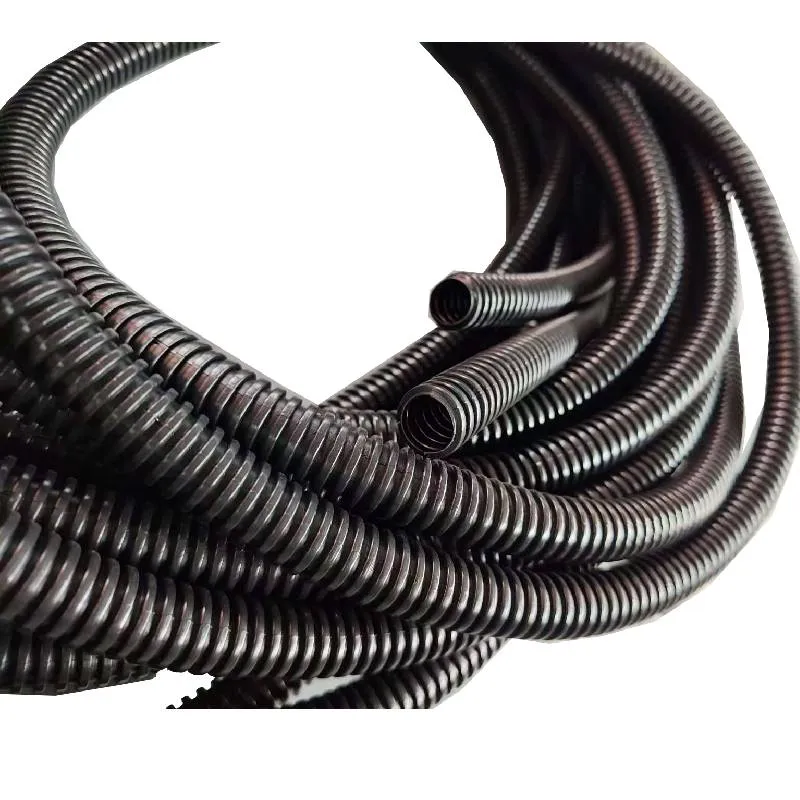
6-inch corrugated plastic pipe is a widely utilized drainage and conveyance solution across numerous industries including stormwater management, agricultural drainage, septic systems, and industrial wastewater handling. This pipe, typically constructed from polyethylene (HDPE) or polypropylene (PP), is characterized by its flexible, ring-like structure which allows for ease of installation and adaptability to varying terrain. Its primary function is to efficiently transport fluids while providing structural stability. The adoption of corrugated plastic pipe represents a significant advancement over traditional materials like concrete and metal, offering advantages in weight, cost-effectiveness, corrosion resistance, and installation speed. A critical performance characteristic is its ability to withstand soil loads and external pressures while maintaining hydraulic capacity. Its position within the supply chain involves raw material suppliers, extrusion and corrugation manufacturers, and ultimately, distribution networks serving construction, agricultural, and municipal sectors. Understanding the intricacies of its construction, performance, and potential failure modes is crucial for engineers, procurement managers, and installers.
Material Science & Manufacturing
The dominant materials in 6-inch corrugated plastic pipe manufacturing are high-density polyethylene (HDPE) and polypropylene (PP). HDPE offers excellent chemical resistance, toughness, and flexibility, making it suitable for diverse environmental conditions. Its molecular structure, characterized by long chains of ethylene monomers, contributes to its high tensile strength and impact resistance. PP, while less flexible than HDPE, exhibits superior temperature resistance and a higher stiffness modulus. The selection depends on the intended application and operational temperature range. Manufacturing begins with the resin pellet, which is melted and extruded through a circular die to form the pipe wall. This is followed by a corrugation process, typically using rollers with grooved profiles, imparting the characteristic ribbed structure. The corrugation geometry – ring height, pitch, and wall thickness – are meticulously controlled to optimize structural strength and flexibility. Key parameters include melt temperature (typically 180-220°C for HDPE, 230-260°C for PP), extrusion rate, roller pressure, and cooling rate. Consistent material density and uniform corrugation are essential for ensuring long-term performance. Quality control involves dimensional checks, hydrostatic pressure testing to verify leak-proof integrity, and impact resistance testing to assess toughness. Chemical compatibility testing is also performed to ensure the material will not degrade when exposed to the transported fluids.
Performance & Engineering
The performance of 6-inch corrugated plastic pipe is governed by several engineering principles. A critical aspect is its ability to withstand external loads imposed by soil cover and surface traffic. This is primarily a function of the pipe’s ring stiffness, defined as the load required to reduce the pipe diameter by a specific percentage. Ring stiffness is directly related to the material’s modulus of elasticity, wall thickness, and corrugation geometry. Soil loading is often analyzed using Boussinesq’s theory or finite element analysis (FEA) to determine stress distribution around the pipe. Hydraulic performance is determined by the Manning’s equation, which relates flow velocity to pipe diameter, slope, and roughness coefficient. The corrugated interior surface increases roughness compared to smooth-walled pipes, impacting flow capacity. Long-term creep, the tendency of plastic materials to deform under sustained load, is a significant consideration. Creep can lead to ovalation and reduced hydraulic capacity over time. Environmental resistance is also crucial. Ultraviolet (UV) exposure can cause degradation of the polymer, necessitating the incorporation of UV stabilizers. Temperature fluctuations can induce thermal expansion and contraction, requiring consideration during installation. Compliance with industry standards, such as ASTM F405 (HDPE corrugated pipe) and ASTM F894 (PP corrugated pipe), is paramount to ensure structural integrity and performance reliability. Drainage systems need to account for hydrostatic pressure, ensuring the pipe can effectively manage water accumulation and prevent collapse.
Technical Specifications
| Parameter | HDPE (ASTM F405) | PP (ASTM F894) | Units |
|---|---|---|---|
| Nominal Diameter | 6 | 6 | inches |
| Minimum Ring Stiffness | 34 | 48 | psi |
| Minimum Tensile Strength | 2000 | 2500 | psi |
| Minimum Impact Resistance | 10 | 12 | ft-lbs |
| Operating Temperature Range | -40 to 180 | -20 to 190 | °F |
| Long-Term Design Basis (Creep) | 50 years | 50 years | Years |
Failure Mode & Maintenance
Common failure modes in 6-inch corrugated plastic pipe include creep rupture, ovalation, cracking, joint failure, and blockage. Creep rupture occurs due to long-term deformation under sustained load, particularly in areas of stress concentration. Ovalation, the distortion of the pipe’s circular cross-section, reduces hydraulic capacity and can lead to collapse. Cracking can result from impact damage, UV degradation, or stress corrosion cracking. Joint failures, often occurring at couplings, are caused by improper installation, soil settlement, or material incompatibility. Blockage can occur due to sediment accumulation, root intrusion, or debris. Preventative maintenance involves periodic visual inspections to identify signs of damage or deformation. Regular cleaning to remove sediment and debris is crucial. Proper installation techniques, including adequate bedding and backfill compaction, minimize stress on the pipe. Addressing localized settlement issues promptly prevents excessive loading. UV protection, such as applying a protective coating or using UV-stabilized materials, extends service life. In the event of minor cracking, repair sleeves or patching compounds can be used to restore structural integrity. However, significant damage often necessitates pipe replacement. Failure analysis should include material testing to assess degradation and determine the root cause of the failure.
Industry FAQ
Q: What is the impact of soil type on the long-term performance of corrugated plastic pipe?
A: Soil type significantly affects pipe performance. Highly plastic clays can exert greater external pressures and cause creep deformation. Granular soils provide better support but may require careful compaction to prevent settlement. Proper bedding and backfill materials, compliant with ASTM D2412, are crucial for distributing loads and minimizing stress on the pipe. Geotextile fabrics are often used to separate the pipe from aggressive soil types and improve drainage.
Q: How does temperature affect the load-bearing capacity of HDPE corrugated pipe?
A: Higher temperatures reduce the modulus of elasticity of HDPE, decreasing its ring stiffness and load-bearing capacity. Conversely, lower temperatures increase stiffness but can make the material more brittle. Design calculations should account for the expected temperature range at the installation site. Using a higher ring stiffness pipe or providing additional support in areas with extreme temperature fluctuations can mitigate these effects.
Q: What are the advantages of corrugated PP pipe over corrugated HDPE pipe?
A: PP pipe offers superior temperature resistance and a higher stiffness modulus, making it suitable for applications with elevated temperatures or high load requirements. However, HDPE is generally more flexible and impact resistant. The choice depends on the specific application requirements and environmental conditions.
Q: What is the recommended slope for 6-inch corrugated plastic pipe used in gravity drainage systems?
A: The recommended slope typically ranges from 0.5% to 2%, depending on the flow rate and pipe material. A steeper slope increases flow velocity but can also lead to erosion. Hydraulic calculations should be performed to determine the optimal slope for the specific application, ensuring sufficient flow capacity and preventing sedimentation.
Q: How can I prevent root intrusion into corrugated plastic pipe?
A: Root intrusion can be minimized by using tight-fitting joints, sealing all connections properly, and applying a root control barrier around the pipe. Regular inspection and cleaning can also help remove any existing roots. Consider using pipe with integrated root barriers or installing geotextile fabrics to prevent root penetration.
Conclusion
6-inch corrugated plastic pipe represents a robust and cost-effective solution for a wide range of drainage and conveyance applications. Its performance is intimately linked to material science, manufacturing precision, and adherence to established engineering principles. Understanding the interplay between ring stiffness, hydraulic capacity, creep behavior, and environmental resistance is critical for ensuring long-term reliability.
Proper installation practices, coupled with regular maintenance, are essential to mitigate potential failure modes such as creep rupture, ovalation, and blockage. As infrastructure demands evolve, continued advancements in material formulations and manufacturing techniques will further enhance the performance and durability of corrugated plastic pipe, solidifying its position as a cornerstone of modern drainage systems.