
Introduction
Corrugated polyethylene (PE) drain pipe coupled with polyvinyl chloride (PVC) fittings represents a prevalent subsurface drainage solution in civil engineering, agricultural applications, and residential construction. This system facilitates the efficient removal of excess water from soil structures, preventing waterlogging, erosion, and foundation damage. The combination leverages the cost-effectiveness and flexibility of corrugated PE, particularly high-density polyethylene (HDPE), for the pipe body, with the durability and established connection methods of PVC for fittings, inlets, and outlets. Its positioning within the broader drainage industry is as a cost-competitive alternative to traditionally concrete or clay pipe systems. Core performance characteristics revolve around flow capacity, crush resistance, joint integrity, and long-term durability in aggressive soil environments. This guide provides an in-depth analysis of the materials, manufacturing, performance, failure modes, and relevant standards associated with corrugated PE drain pipe coupled with PVC components.
Material Science & Manufacturing
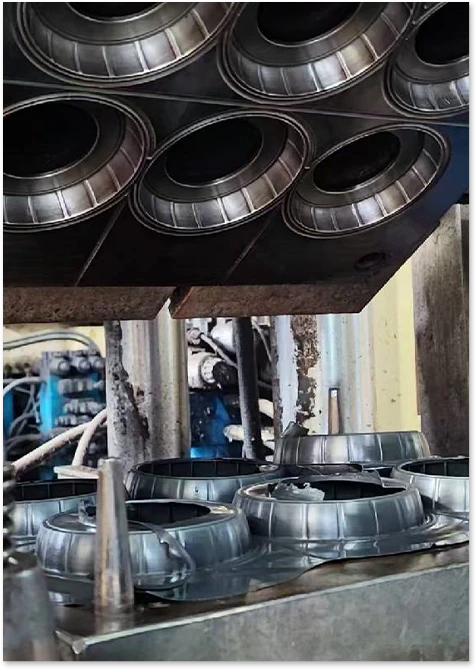
The core materials are HDPE for the corrugated pipe and PVC for the fittings. HDPE exhibits excellent chemical resistance, a high strength-to-density ratio, and flexibility, allowing for easier installation and adaptation to ground movement. Manufacturing of the corrugated pipe utilizes extrusion and corrugation processes. HDPE resin is melted and extruded through a die, forming a continuous sheet. This sheet is then passed through a corrugation unit, creating the characteristic ribbed structure. The corrugation profile (single-wall, dual-wall, triple-wall) dictates the pipe's crush resistance. Critical parameters include extrusion temperature (180-240°C), die pressure (controlled by screw speed and back pressure), and cooling rate. PVC fittings are typically manufactured using injection molding. PVC resin is blended with stabilizers, lubricants, and impact modifiers, then injected into a mold cavity. Control of mold temperature (30-60°C) and injection pressure (50-100 MPa) is crucial for achieving dimensional accuracy and optimal material properties. The compatibility between HDPE and PVC is primarily mechanical, through the use of specifically designed couplers and adapters. Chemical compatibility isn't a primary concern as there's limited direct contact, but long-term burial can expose the connection points to soil contaminants, necessitating proper joint sealing to prevent ingress.
Performance & Engineering
Performance of corrugated PE drain pipe with PVC fittings centers around hydraulic capacity, structural integrity, and long-term durability. Flow capacity is determined by Manning's equation, influenced by the pipe's internal diameter, slope, and roughness coefficient. Corrugation increases the wetted perimeter, impacting the hydraulic performance. Structural integrity is assessed by evaluating the pipe’s ability to withstand external loads – soil overburden, traffic loads, and hydrostatic pressure. This is primarily a function of the pipe's crush resistance, determined by the corrugation profile and material stiffness. Finite element analysis (FEA) is frequently used to model the stress distribution under various loading conditions. Environmental resistance is critical. HDPE is generally resistant to most soil chemicals, but prolonged exposure to strong acids or bases can cause degradation. PVC fittings are susceptible to UV degradation and require protection in exposed applications. Compliance with ASTM F405 and AASHTO M252 standards ensures minimum performance requirements related to crush strength, joint tightness, and material properties. Force analysis during installation is vital, ensuring proper bedding and backfill compaction to prevent deformation or cracking. Thermal expansion and contraction differences between HDPE and PVC must be accounted for during installation to prevent stress on the joints.
Technical Specifications
| Parameter | HDPE Pipe (12-inch Diameter) | PVC Fitting (12-inch Diameter) | Units |
|---|---|---|---|
| Material | High-Density Polyethylene (HDPE) | Polyvinyl Chloride (PVC) | - |
| Crush Strength | 680 | N/A - Structural support from pipe | lbs |
| Tensile Strength | 4,000 | 6,000 | psi |
| Flexural Modulus | 120,000 | 300,000 | psi |
| Diameter | 12 | 12 | inches |
| Wall Thickness | 0.75 | 0.875 | inches |
| Joint Type | Coupler with Rubber Gasket | Solvent Welded or Mechanical Joint | - |
Failure Mode & Maintenance
Failure modes in corrugated PE drain pipe systems coupled with PVC fittings commonly include joint failure, pipe deformation (ovalization or buckling), cracking, and blockage. Joint failure can occur due to improper installation, gasket degradation, or soil settlement causing differential movement. Pipe deformation results from excessive external loads or inadequate bedding support. Cracking can arise from stress concentrations at fittings, material defects, or impacts during installation. Blockage is often caused by sediment buildup, root intrusion, or debris accumulation. Failure analysis typically involves visual inspection, soil testing (pH, chemical composition), and material testing (tensile strength, impact resistance). Preventive maintenance includes regular inspection of outlets for blockage, clearing vegetation around inlets, and ensuring proper surface drainage to minimize water infiltration. Repair options range from patching cracks with epoxy compounds to replacing damaged sections of pipe or fittings. In cases of significant settlement, ground stabilization techniques may be necessary. Avoid using heavy machinery directly over the pipe during backfilling to prevent crushing. Long-term durability is enhanced by proper installation techniques, including adequate bedding and backfill compaction, and the use of geotextile fabric to prevent soil intrusion.
Industry FAQ
Q: What is the impact of soil corrosivity on the lifespan of a corrugated PE/PVC drain system?
A: Highly corrosive soils, particularly those with high sulfate or chloride content, can accelerate degradation of both HDPE and PVC. While HDPE is generally resistant, prolonged exposure can lead to embrittlement. PVC is more susceptible to chemical attack. Using a protective coating on the PVC fittings, selecting HDPE resins with enhanced chemical resistance, and implementing proper joint sealing to prevent contaminant ingress are crucial mitigation strategies. Soil testing prior to installation is essential.
Q: How does the choice of bedding material affect the long-term performance of corrugated drain pipe?
A: Proper bedding material is critical. Granular materials, such as gravel or crushed stone, provide uniform support and promote drainage. Avoid using clay-rich soils, as they can exert significant pressure on the pipe and impede water flow. The bedding layer should extend at least 6 inches around the pipe. Geotextile fabric should be used to separate the bedding material from the surrounding soil, preventing migration of fines and maintaining permeability.
Q: What are the limitations of using corrugated PE pipe in high-water table environments?
A: In high-water table environments, hydrostatic pressure can cause pipe deformation or flotation, particularly if the pipe is not adequately anchored. Using pipes with higher crush resistance, increasing the depth of cover, and incorporating ballast materials around the pipe can mitigate these risks. Consideration should be given to the potential for soil saturation and loss of support.
Q: What type of PVC fitting is most suitable for connecting to corrugated PE pipe, and what are the critical installation considerations?
A: Specifically designed PVC couplers with rubber gaskets are the most common and reliable method for connecting to corrugated PE. These couplers provide a watertight seal and accommodate some differential movement. Proper insertion of the pipe into the coupler, ensuring the gasket is correctly positioned, and following the manufacturer's torque specifications are critical installation considerations. Solvent welding PVC fittings directly to HDPE is not recommended due to material incompatibility.
Q: Can corrugated PE drain pipe be used for gravity sewer applications?
A: While corrugated PE pipe can handle gravity flow, it's generally not recommended for primary sewer lines due to potential for collapse under heavy loads and the risk of root intrusion. It's best suited for subsurface drainage applications where loads are lighter and the focus is on water removal from soil structures. For sewer applications, heavier-duty pipe materials like concrete or ductile iron are typically preferred.
Conclusion
Corrugated polyethylene drain pipe coupled with PVC fittings presents a robust and cost-effective solution for subsurface drainage. Its success hinges on the careful consideration of material properties, manufacturing processes, and installation best practices. Understanding the potential failure modes – primarily related to joint integrity, structural stability, and environmental factors – is paramount for ensuring long-term performance and minimizing maintenance requirements. Proper engineering design, including appropriate pipe sizing, bedding selection, and load analysis, is crucial for optimizing system efficiency and preventing premature failure.
Future trends in this field include the development of enhanced HDPE resins with improved chemical resistance and impact strength, the integration of smart monitoring technologies for detecting blockages or leaks, and the exploration of bio-based polymers as sustainable alternatives to traditional plastics. Continued adherence to industry standards and rigorous quality control measures will be essential for maintaining the reliability and longevity of corrugated PE/PVC drainage systems in a diverse range of applications.