
Introduction
Corrugated PVC hose is a flexible, lightweight tubular product commonly utilized for the conveyance of fluids and gases in a wide range of industrial, agricultural, and domestic applications. Its position within the fluid transfer industry chain is as a cost-effective alternative to metallic hoses, rubber hoses, and rigid piping, particularly where ease of installation, flexibility, and corrosion resistance are paramount. Core performance characteristics include pressure handling capability, resistance to chemical attack (dependent on PVC formulation), temperature tolerance, and overall durability. A key pain point within various industries is balancing cost with the required performance specifications, often requiring careful selection of PVC compound and hose construction to meet specific application demands. The hose’s corrugated structure contributes significantly to its flexibility and ability to accommodate movement and vibration without failure, addressing a critical need in dynamic systems. Furthermore, maintaining consistent wall thickness and material properties throughout the manufacturing process is crucial for preventing premature failure and ensuring operational safety.
Material Science & Manufacturing
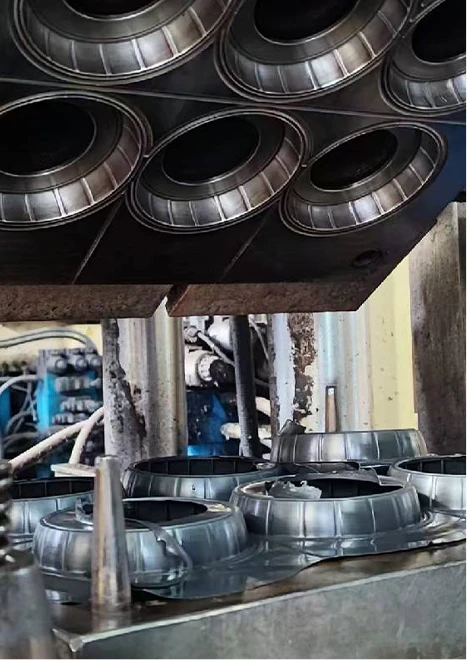
The primary raw material for corrugated PVC hose is Polyvinyl Chloride (PVC) resin. PVC is an amorphous thermoplastic, known for its inherent chemical resistance, low cost, and ease of processing. The specific grade of PVC used dictates the hose’s final properties, with formulations varying in plasticizer content, thermal stabilizers, and impact modifiers. Plasticizers, such as phthalates or DINP, are added to increase flexibility. Thermal stabilizers, commonly calcium-zinc or lead-based compounds (though the latter is increasingly restricted due to environmental concerns), prevent degradation during processing and use. Impact modifiers enhance resistance to cracking under stress. Manufacturing typically involves extrusion. PVC compound is fed into a single-screw or twin-screw extruder, melted, and forced through a die that forms the corrugated profile. The corrugated shape is achieved using a series of rollers or forming belts immediately after extrusion. Key parameters during extrusion include barrel temperature profile (typically ranging from 160°C to 210°C), screw speed, die pressure, and cooling rate. Precise control of these parameters is essential for maintaining dimensional accuracy, consistent wall thickness, and a smooth surface finish. Post-extrusion, the hose may undergo further processing such as sizing, cutting to length, and the attachment of fittings. Quality control measures include regular testing of the PVC compound for viscosity, molecular weight, and plasticizer content, as well as dimensional inspection of the finished hose. The selection of PVC compound and extrusion parameters must consider the intended application and the specific chemical environment the hose will be exposed to.
Performance & Engineering
The performance of corrugated PVC hose is largely dictated by its ability to withstand internal pressure, external loads, and environmental factors. Force analysis considers hoop stress (resulting from internal pressure) and bending stress (induced by flexing and handling). Hoop stress is calculated using Barlow's formula, modified for corrugated structures. The corrugated profile distributes stress more evenly than a smooth-walled hose, enhancing pressure resistance. However, the corrugations also create stress concentration points, requiring careful design and manufacturing to avoid premature failure. Environmental resistance is a critical concern. Prolonged exposure to UV radiation can cause PVC degradation, leading to embrittlement and cracking. Therefore, UV stabilizers are often added to the PVC formulation. Temperature extremes can also affect performance; PVC becomes brittle at low temperatures and may soften or deform at high temperatures. Compliance requirements vary by region and application. For potable water applications, the PVC compound must meet stringent standards for extractable contaminants, such as those defined by NSF/ANSI 61. For food-grade applications, compliance with FDA regulations is essential. In industrial settings, hoses may need to comply with OSHA safety standards and relevant industry-specific regulations. Functional implementation often involves the use of various fittings (e.g., barbed fittings, threaded fittings) to connect the hose to other components. The compatibility of the fitting material with the PVC hose is crucial to prevent corrosion or degradation at the connection point. Furthermore, proper support and routing of the hose are important to minimize stress and prevent kinking or abrasion.
Technical Specifications
| Parameter | Unit | Typical Value | Test Standard |
|---|---|---|---|
| Working Pressure | PSI | 150-300 | ASTM D246 |
| Burst Pressure | PSI | 450-900 | ASTM D246 |
| Tensile Strength | MPa | 50-60 | ASTM D638 |
| Elongation at Break | % | 200-300 | ASTM D638 |
| Hardness | Shore A | 70-80 | ASTM D2240 |
| Operating Temperature Range | °C | -10 to 60 | ASTM D790 |
Failure Mode & Maintenance
Corrugated PVC hose is susceptible to several failure modes, including fatigue cracking, kinking, chemical degradation, and UV embrittlement. Fatigue cracking typically occurs at the base of the corrugations due to repeated flexing and pressure cycling. Kinking can result from excessive bending or improper support, leading to localized stress concentration and potential rupture. Chemical degradation occurs when the hose is exposed to incompatible chemicals, causing swelling, softening, or cracking. The specific chemicals that can cause degradation depend on the PVC formulation. UV embrittlement results from prolonged exposure to sunlight, causing the PVC to become brittle and prone to cracking. Maintenance practices can significantly extend the service life of the hose. Regular visual inspection for cracks, kinks, and signs of degradation is essential. Avoid exposing the hose to extreme temperatures or incompatible chemicals. Proper storage, away from direct sunlight and moisture, is also important. When handling the hose, avoid sharp bends or abrasive surfaces. If damage is detected, the hose should be replaced immediately. For applications involving high pressures or critical fluids, a preventative maintenance schedule should be implemented, including periodic pressure testing and inspection of fittings. The use of appropriate fittings and clamps is crucial for preventing leaks and ensuring the integrity of the connection. Failure analysis should be conducted on any hose that fails prematurely to identify the root cause and prevent recurrence.
Industry FAQ
Q: What is the impact of plasticizer migration on the long-term performance of corrugated PVC hose?
A: Plasticizer migration, the leaching of plasticizers from the PVC matrix, can lead to a loss of flexibility and increased brittleness over time. This process is accelerated by exposure to elevated temperatures and certain chemicals. Lower-quality PVC formulations with high plasticizer content are more susceptible to this phenomenon. Selecting hoses with optimized plasticizer formulations and UV stabilizers can mitigate plasticizer migration and extend service life.
Q: How does the corrugated design affect the burst pressure compared to a smooth-bore PVC hose of the same dimensions and wall thickness?
A: While a smooth-bore hose might initially appear to have a higher theoretical burst pressure, the corrugated design distributes stress more evenly, increasing the overall resilience. However, the corrugations introduce stress concentration points. Therefore, the actual burst pressure depends heavily on the quality of manufacturing and the specific corrugation profile. Properly designed corrugated hose will often perform comparably or even better than a smooth-bore hose under dynamic loading conditions.
Q: What considerations should be made when selecting a corrugated PVC hose for use with abrasive materials?
A: Abrasive materials can cause erosion of the inner wall of the hose, leading to reduced wall thickness and eventual failure. Selecting a hose with a thicker wall and a more abrasion-resistant PVC compound is essential. Alternatively, consider using a hose with a specialized inner liner designed to withstand abrasion. Regular inspection for wear and tear is also crucial.
Q: Can corrugated PVC hose be used for vacuum applications? What limitations apply?
A: Yes, corrugated PVC hose can be used for some vacuum applications, but it has limitations. The hose’s ability to withstand collapse under vacuum pressure depends on its stiffness and the corrugation profile. It is essential to ensure the hose is adequately supported to prevent it from collapsing. The vacuum level should also be within the hose’s specified operating range.
Q: How important is the selection of fittings, and what materials are typically compatible with corrugated PVC hose?
A: Fitting selection is critical. Incompatible materials can lead to corrosion, leakage, and premature failure. Commonly compatible materials include PVC, polypropylene (PP), and certain grades of stainless steel. Avoid using fittings made from materials that react with PVC or cause it to degrade. Ensure the fittings are properly sized and securely attached to the hose using appropriate clamps or adhesives.
Conclusion
Corrugated PVC hose represents a versatile and cost-effective solution for a wide array of fluid transfer applications. Its performance is intrinsically linked to material science considerations, specifically the PVC compound formulation, and precise control of manufacturing parameters. Understanding the potential failure modes, including fatigue cracking, chemical degradation, and UV embrittlement, is crucial for ensuring long-term reliability and operational safety. Proper maintenance and adherence to relevant industry standards are paramount.
Future developments in corrugated PVC hose technology are likely to focus on enhancing chemical resistance through novel PVC formulations, improving UV stability, and increasing overall durability. The adoption of smart sensors integrated into the hose structure for real-time pressure monitoring and leak detection is also a potential area of innovation. Ultimately, a thorough understanding of the technical specifications and limitations of corrugated PVC hose is essential for engineers and procurement managers seeking to optimize performance and minimize lifecycle costs.