
Introduction
Plastic pipe elbows are critical components in fluid and gas conveyance systems, facilitating directional changes in piping networks. They represent a significant portion of the overall piping system cost and performance, impacting flow rates, pressure drop, and long-term reliability. Predominantly manufactured from thermoplastic materials such as Polyvinyl Chloride (PVC), Chlorinated Polyvinyl Chloride (CPVC), Polypropylene (PP), and Polyethylene (PE), these fittings are utilized across diverse industries including potable water distribution, wastewater treatment, irrigation, chemical processing, and industrial plumbing. Their selection and installation are governed by stringent engineering considerations related to pressure ratings, temperature limitations, chemical compatibility, and applicable regulatory standards. A key industry pain point lies in ensuring consistent material quality and dimensional accuracy to prevent failures, particularly in high-stress applications or when handling corrosive fluids. Furthermore, the long-term degradation of the plastic material under UV exposure and temperature fluctuations presents ongoing challenges for system designers and operators. This guide provides a comprehensive technical overview of plastic pipe elbows, covering material science, manufacturing processes, performance characteristics, failure modes, and relevant industry standards.
Material Science & Manufacturing
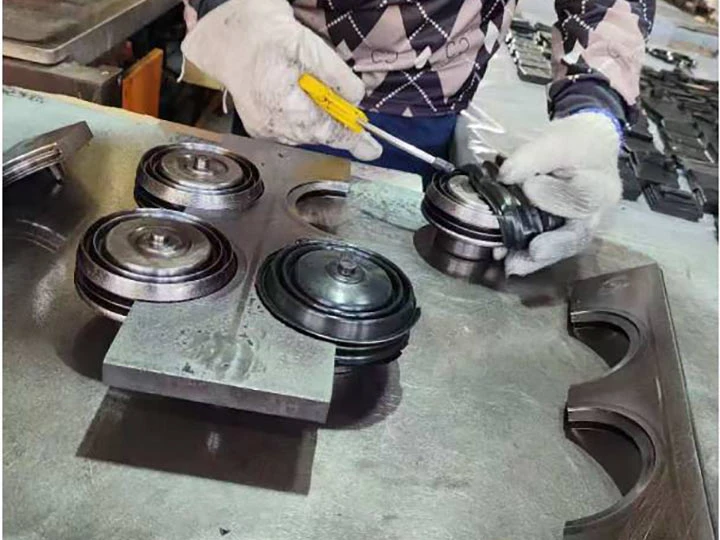
The material selection for plastic pipe elbows is fundamentally dictated by the application's requirements regarding pressure, temperature, chemical resistance, and cost. PVC, known for its rigidity and cost-effectiveness, is commonly used in low-pressure, ambient temperature applications. CPVC offers enhanced temperature resistance, making it suitable for hot water systems. PP exhibits excellent chemical resistance and is frequently employed in chemical processing. PE, particularly High-Density Polyethylene (HDPE), provides superior flexibility and impact resistance, often favored for underground applications and larger diameter piping. The manufacturing process typically involves injection molding. Raw plastic resin, along with stabilizers, lubricants, and colorants, is heated and injected under high pressure into a mold cavity shaped like the desired elbow geometry. Key parameters during injection molding include melt temperature, injection pressure, mold temperature, and cooling rate. Precise control of these parameters is critical to achieve consistent wall thickness, minimize internal stresses, and prevent warping or shrinkage. Extrusion followed by forming (e.g., hot bending) is also employed for larger diameter elbows. Material properties crucial for elbow performance include tensile strength (ASTM D638), flexural modulus (ASTM D790), impact resistance (ASTM D256), and hardness (ASTM D2240). Chemical compatibility, assessed through immersion testing (ASTM D543), determines the elbow’s resistance to degradation by the conveyed fluid. The presence of plasticizers and stabilizers, while enhancing processability and UV resistance, can influence long-term performance and must be carefully considered.
Performance & Engineering
The performance of a plastic pipe elbow is primarily governed by its ability to withstand internal pressure and external loads without failure. Force analysis, employing Finite Element Analysis (FEA), is routinely used to assess stress distribution within the elbow under various loading conditions, including hydrostatic pressure, bending moments due to pipe weight, and thermal stresses. A critical design consideration is the bend radius – a smaller radius introduces higher stress concentrations at the inner radius. The allowable stress levels are determined by the material’s long-term hydrostatic strength (LTHS), which considers the effects of sustained pressure and temperature. Environmental resistance is another key factor. UV exposure can cause chain scission and embrittlement, particularly in PVC, reducing its impact strength and leading to cracking. Stabilizers are added to mitigate UV degradation, but their effectiveness diminishes over time. Temperature fluctuations cause thermal expansion and contraction, which can induce stresses at the pipe-elbow interface. Proper jointing techniques, employing solvent welding or mechanical couplings, are essential to accommodate these movements and prevent leaks. Compliance with industry standards, such as ANSI/ASME B31.3 for process piping and AWWA C907 for potable water systems, mandates specific performance requirements and testing procedures. Furthermore, the elbow’s contribution to overall system pressure drop must be calculated using fluid dynamics principles (Darcy-Weisbach equation) to ensure adequate flow rates.
Technical Specifications
| Material | Pressure Rating (PSI) @ 73°F | Temperature Range (°F) | Schedule | Diameter (inches) | Bend Angle (degrees) |
|---|---|---|---|---|---|
| PVC | 200 | -40 to 140 | 40 | 1/2 - 4 | 45, 90 |
| CPVC | 300 | -60 to 180 | 40, 80 | 1/2 - 3 | 45, 90 |
| PP | 150 | 32 to 176 | 40 | 1/2 - 2 | 45, 90 |
| PE | 100 | -76 to 140 | 40 | 1/2 - 12 | 45, 90 |
| PVC (SDR 21) | 350 | -40 to 140 | 21 | 4 - 12 | 45, 90 |
| CPVC (SDR 11) | 450 | -60 to 180 | 11 | 2 - 6 | 45, 90 |
Failure Mode & Maintenance
Plastic pipe elbows are susceptible to several failure modes. Fatigue cracking can occur under cyclic pressure or mechanical loads, especially at stress concentrators like the inner bend radius. Chemical attack by the conveyed fluid can cause degradation and embrittlement, leading to leaks or catastrophic failure. UV exposure induces chain scission and reduces impact strength, increasing the risk of cracking. Thermal stresses, arising from temperature fluctuations, can cause deformation or cracking at the pipe-elbow joint. Delamination can occur due to poor bonding during manufacturing or improper jointing. Oxidation, particularly at elevated temperatures, can degrade the material properties. Maintenance primarily involves visual inspection for cracks, leaks, or signs of degradation. Regular cleaning to remove debris and contaminants is also recommended. For systems handling corrosive fluids, periodic material testing to assess remaining wall thickness and chemical resistance is advisable. If cracking or degradation is detected, the elbow should be replaced immediately. Proper installation, including correct jointing techniques and adequate support to minimize stress, is crucial for preventing failures. Preventative measures include utilizing UV-resistant materials or applying protective coatings in outdoor applications and ensuring proper ventilation to mitigate temperature extremes.
Industry FAQ
Q: What is the impact of different solvent cements on the long-term performance of a PVC elbow joint?
A: The type of solvent cement significantly affects the joint's strength and durability. Using a cement not specifically designed for the PVC formulation can result in incomplete fusion, creating a weak point prone to failure. Primer is crucial for preparing the surfaces for bonding, removing contaminants, and softening the PVC to facilitate proper fusion. The cement's viscosity and application temperature must also be appropriate for the ambient conditions. Long-term performance is impacted by the cement’s ability to maintain a flexible bond that accommodates thermal expansion and contraction.
Q: How does the schedule number (e.g., Schedule 40, Schedule 80) affect the pressure rating of a CPVC elbow?
A: The schedule number directly correlates to the wall thickness of the elbow. A higher schedule number indicates a thicker wall, which provides greater resistance to internal pressure. Consequently, a Schedule 80 CPVC elbow will have a higher pressure rating than a Schedule 40 elbow of the same diameter. This is because the thicker wall provides a larger cross-sectional area to withstand the internal pressure forces.
Q: What are the primary considerations when selecting a plastic elbow for an underground application handling aggressive soil conditions?
A: For underground applications, HDPE elbows are generally preferred due to their superior flexibility, impact resistance, and chemical resistance. However, regardless of the material, the elbow should be designed to withstand the external loads from soil backfill and potential ground movement. Corrosion resistance is paramount, and the elbow should be compatible with any corrosive substances present in the soil. Proper bedding and backfilling procedures are crucial to prevent stress concentrations and ensure long-term stability.
Q: Can a plastic elbow be directly connected to a metal pipe without the use of a dielectric union, and what are the potential consequences?
A: Directly connecting a plastic elbow to a metal pipe is generally not recommended without a dielectric union. Galvanic corrosion can occur due to the electrochemical potential difference between the two dissimilar metals, leading to accelerated corrosion of the metal pipe. A dielectric union provides electrical isolation, preventing the flow of stray currents and mitigating galvanic corrosion. Failure to use a dielectric union can result in premature failure of the metal piping system.
Q: What testing methods are typically used to verify the integrity of a welded CPVC elbow joint in a critical process application?
A: Non-destructive testing (NDT) methods are commonly employed to verify the integrity of welded CPVC joints. These include visual inspection for weld defects, dye penetrant testing to detect surface cracks, and ultrasonic testing to identify subsurface flaws. Hydrostatic testing, applying a pressure significantly exceeding the operating pressure, is often performed to confirm the joint’s ability to withstand stress. Radiographic testing (X-ray) can also be used for critical applications requiring a thorough assessment of weld quality.
Conclusion
Plastic pipe elbows are indispensable components in modern fluid handling systems, offering a cost-effective and versatile solution for directional changes in piping networks. The selection of the appropriate material and manufacturing process is crucial to ensure long-term performance and reliability, considering factors such as pressure, temperature, chemical compatibility, and UV exposure. A thorough understanding of potential failure modes, coupled with proactive maintenance strategies, is essential for preventing costly downtime and ensuring system integrity.
Future developments will likely focus on the development of enhanced thermoplastic formulations with improved chemical resistance, UV stability, and mechanical properties. Advancements in welding and joining techniques, as well as the integration of smart sensors for real-time monitoring of elbow performance, will further enhance the safety and efficiency of piping systems. Continued adherence to relevant industry standards and best practices remains paramount for ensuring the safe and reliable operation of plastic pipe elbow systems.