
Introduction
Plastic swivel wheels represent a critical component in material handling systems across a diverse range of industries, including logistics, manufacturing, healthcare, and retail. These wheels, characterized by their rotational freedom and polymeric construction, facilitate the movement of loads across various surfaces with reduced friction compared to fixed wheels. Their technical position within the broader material handling chain lies between the load carrier (e.g., cart, trolley, pallet jack) and the supporting surface (e.g., concrete floor, epoxy coating). Core performance characteristics center around load capacity, swivel radius, rolling resistance, wear resistance, and chemical inertness. The increasing demand for quieter, non-marking, and corrosion-resistant solutions has propelled the utilization of specialized plastic formulations in swivel wheel manufacturing, posing both challenges and opportunities for material scientists and engineers. A key industry pain point revolves around balancing cost-effectiveness with long-term durability and maintaining consistent performance under dynamic loading conditions.
Material Science & Manufacturing
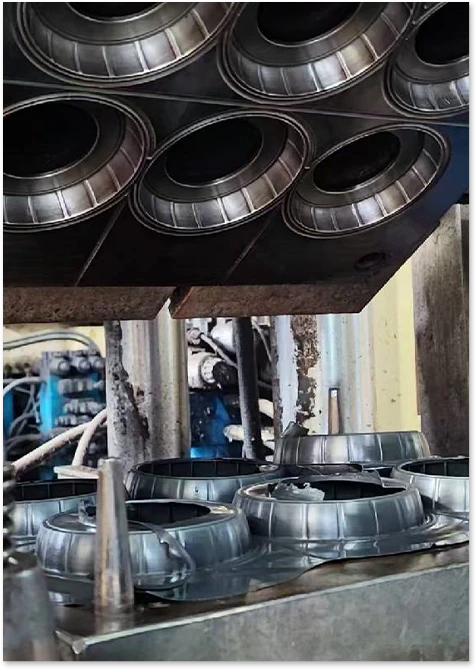
The most common raw materials used in plastic swivel wheel manufacturing include Polypropylene (PP), Polyethylene (PE), Nylon (Polyamide 6 & 66), Polyurethane (PU), and Acrylonitrile Butadiene Styrene (ABS). PP and PE offer cost-effectiveness and good impact resistance, but possess lower temperature resistance and higher creep tendencies. Nylon provides superior wear resistance, strength, and chemical resistance, but is susceptible to moisture absorption which can lead to dimensional instability. PU, often used in the wheel tread, offers excellent abrasion resistance and load-bearing capacity, albeit at a higher cost. ABS balances impact strength, rigidity, and processability. Manufacturing processes vary depending on component complexity. Wheel cores are frequently produced via injection molding, allowing for intricate geometries and high production volumes. Key parameters controlled during injection molding include melt temperature, mold temperature, injection pressure, and cooling rate, all influencing the final part's mechanical properties and dimensional accuracy. Swivel housings often employ similar injection molding techniques, demanding precise mold design to ensure smooth and reliable swivel action. The wheel tread, especially when utilizing PU, may be formed through reaction injection molding (RIM) or cast molding, demanding careful control of mixing ratios and curing parameters. Surface treatments, such as UV stabilization and anti-static coatings, are applied post-molding to enhance durability and performance characteristics. The chemical compatibility between the plastic material and the intended load (and cleaning agents) is a critical consideration in material selection to prevent degradation or embrittlement.
Performance & Engineering
Performance of plastic swivel wheels is largely dictated by force analysis under load. Static load capacity, dynamic load capacity, and impact resistance are paramount. Finite Element Analysis (FEA) is widely employed to simulate stress distribution within the wheel and housing under various loading scenarios, optimizing geometry and material selection to minimize deformation and prevent failure. Swivel radius and maneuverability are key engineering considerations, especially in confined spaces. Bearing design within the swivel mechanism significantly impacts rolling resistance and swivel smoothness; materials such as hardened steel, stainless steel, and polymer bearings are utilized. Environmental resistance is crucial; exposure to UV radiation, temperature fluctuations, and corrosive chemicals can degrade polymer properties. UV stabilizers are commonly added to formulations to mitigate UV degradation. Compliance requirements, such as RoHS and REACH, dictate restrictions on hazardous substances used in manufacturing. Specifically, the wheel’s performance is affected by its resistance to deformation under load, calculated using material-specific Young’s modulus and Poisson’s ratio. The coefficient of friction between the wheel and the floor surface directly impacts the force required to initiate and maintain movement, necessitating selection of appropriate materials and surface finishes to minimize rolling resistance. Furthermore, the swivel mechanism’s angular travel and its resistance to binding are critical for operational efficiency.
Technical Specifications
| Material | Load Capacity (kg) | Wheel Diameter (mm) | Swivel Radius (mm) |
|---|---|---|---|
| Polypropylene (PP) | 50 | 50 | 25 |
| Polyethylene (PE) | 75 | 75 | 37.5 |
| Nylon 6 | 100 | 100 | 50 |
| Nylon 66 | 150 | 125 | 62.5 |
| Polyurethane (PU) - Tread | 200 | 150 | 75 |
| ABS | 60 | 60 | 30 |
Failure Mode & Maintenance
Common failure modes for plastic swivel wheels include fatigue cracking around stress concentration points (e.g., swivel axis, wheel mounting points), delamination of the wheel tread from the core, creep deformation under sustained load, and degradation due to UV exposure or chemical attack. Fatigue cracking is initiated by cyclic loading and exacerbated by material defects or sharp corners. Delamination occurs when adhesive bonding between the tread and core weakens due to environmental factors or manufacturing flaws. Creep, the time-dependent deformation under constant load, is particularly prevalent in polymers like PP and PE. UV degradation leads to embrittlement and loss of impact resistance. Chemical attack can cause swelling, cracking, or dissolution of the polymer. Maintenance involves regular inspection for cracks, delamination, and excessive wear. Lubrication of the swivel bearing is crucial to reduce friction and prevent binding. Cleaning with mild detergents is recommended, avoiding harsh solvents that can damage the plastic. Preventive replacement of worn wheels is essential to avoid sudden failure and potential safety hazards. Detailed failure analysis, including microscopic examination of fracture surfaces, helps identify root causes and inform material selection and design improvements. Periodically tightening mounting hardware is also critical to prevent premature failure.
Industry FAQ
Q: What are the primary differences in performance between Nylon 6 and Nylon 66 swivel wheels?
A: Nylon 66 exhibits superior tensile strength, higher temperature resistance, and lower moisture absorption compared to Nylon 6. This translates to a higher load capacity, better dimensional stability, and improved performance in demanding environments. However, Nylon 6 is generally more impact resistant and less expensive than Nylon 66.
Q: How does the choice of wheel material affect marking on the floor?
A: Polyurethane (PU) wheels generally leave no marks on most floor surfaces. Polypropylene (PP) and polyethylene (PE) can sometimes cause scuffing or marking, particularly on softer surfaces. Nylon wheels are typically non-marking, but can occasionally leave residue if contaminated with debris. The hardness of the wheel material also plays a role; softer materials are more prone to marking.
Q: What is the significance of the durometer rating for polyurethane treads?
A: The durometer rating measures the hardness of the polyurethane. Lower durometer values indicate softer, more flexible treads that provide better shock absorption and conform to uneven surfaces. Higher durometer values indicate harder, more durable treads that offer greater abrasion resistance and load-bearing capacity. The optimal durometer depends on the application's specific requirements.
Q: How can I mitigate the risk of creep deformation in PP or PE swivel wheels under sustained loads?
A: Selecting a wheel with a larger diameter and thicker cross-section can reduce creep. Using a reinforced polymer composite (e.g., PP with glass fiber) can significantly improve creep resistance. Reducing the applied load or implementing a rotation schedule to distribute the load can also help. Regular inspection for deformation is essential.
Q: What certifications should I look for to ensure compliance with safety and environmental regulations?
A: Look for certifications such as RoHS (Restriction of Hazardous Substances) and REACH (Registration, Evaluation, Authorisation and Restriction of Chemicals) to ensure compliance with environmental regulations. ISO 9001 certification indicates a robust quality management system. Depending on the application, specific industry standards related to material handling equipment may also be relevant.
Conclusion
Plastic swivel wheels are engineered components crucial for efficient material handling. The selection of appropriate materials—ranging from cost-effective PP and PE to durable Nylon and PU—directly impacts performance characteristics such as load capacity, wear resistance, and environmental resilience. Understanding manufacturing processes, particularly injection molding parameters, is essential for achieving consistent quality. By carefully considering force analysis, compliance requirements, and potential failure modes, engineers and procurement managers can optimize swivel wheel performance and longevity.
Future developments in plastic swivel wheel technology are likely to focus on lightweight materials, enhanced impact resistance, and smart features such as integrated sensors for load monitoring and predictive maintenance. Furthermore, increased emphasis on sustainable materials and circular economy principles will drive innovation in biodegradable and recyclable plastic formulations. Continued research into advanced polymer composites and surface treatments will lead to even more durable and reliable swivel wheel solutions.