
Introduction
Rubber vacuum hose adapters are critical components in fluid transfer systems across diverse industrial applications, including automotive repair, industrial cleaning, chemical processing, and laboratory environments. These adapters facilitate the secure connection between vacuum hoses and equipment such as vacuum pumps, collection tanks, and machinery ports. Their primary function is to maintain vacuum integrity, preventing air leaks that would compromise system efficiency. Positioned as intermediary connectors within a larger pneumatic or fluid handling system, the adapter’s performance directly impacts overall system reliability and operational effectiveness. Core performance characteristics include vacuum pressure rating, chemical compatibility with transferred media, and mechanical strength to withstand operational stresses. The industry faces key challenges including maintaining consistent dimensional accuracy to ensure leak-proof seals, selecting appropriate rubber compounds for specific chemical exposures, and minimizing adapter weight while preserving structural integrity.
Material Science & Manufacturing
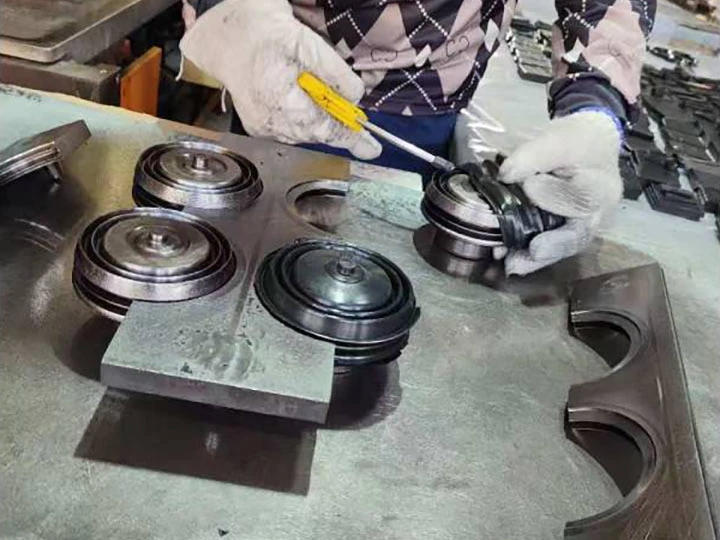
The predominant material used in rubber vacuum hose adapters is a variety of elastomers, with Natural Rubber (NR), Nitrile Butadiene Rubber (NBR), Ethylene Propylene Diene Monomer (EPDM), and Silicone Rubber being the most common. Natural Rubber offers high tensile strength and elasticity but exhibits poor resistance to oils and solvents. NBR excels in oil resistance, making it suitable for automotive and industrial applications. EPDM demonstrates excellent resistance to weathering, ozone, and heat, making it ideal for outdoor or high-temperature environments. Silicone Rubber provides a wide temperature range and excellent chemical inertness, commonly used in laboratory and food-grade applications. The manufacturing process typically involves compression molding or injection molding. Compression molding entails placing a pre-determined amount of rubber compound into a heated mold cavity and applying pressure to form the adapter. Injection molding offers higher precision and faster cycle times, particularly suitable for complex geometries. Critical parameters during molding include mold temperature, pressure, and curing time. Post-molding operations often include trimming excess material (flash), quality inspection for dimensional accuracy and surface defects, and potentially surface treatment for improved chemical resistance or electrostatic dissipation. Reinforcement layers, often comprised of textile or wire braiding, can be incorporated during molding to enhance burst pressure resistance and prevent hose collapse under vacuum. The durometer (hardness) of the rubber compound, measured using the Shore A scale, is a crucial parameter, influencing both flexibility and resistance to abrasion.
Performance & Engineering
Performance of rubber vacuum hose adapters is fundamentally governed by their ability to withstand both negative pressure (vacuum) and external mechanical stresses. Force analysis focuses on hoop stress within the adapter wall due to internal vacuum and tensile stress during connection and disconnection. Finite Element Analysis (FEA) is frequently employed to optimize adapter geometry and reinforcement design to minimize stress concentrations and predict failure points. Environmental resistance is paramount, with chemical compatibility being a significant concern. The rubber compound must be resistant to the media being transferred to prevent swelling, degradation, or leaching of plasticizers. Temperature variations also impact performance, as extreme temperatures can alter rubber elasticity and lead to cracking or deformation. Compliance requirements vary depending on the application. For automotive applications, adapters may need to meet SAE J20R standards for hose and fittings. In food and beverage processing, materials must comply with FDA regulations for food contact safety. For hazardous environments, adapters may require electrostatic dissipation properties to prevent static discharge and potential ignition of flammable materials. The connector geometry – typically barbed, threaded, or flanged – dictates the ease of connection and the security of the seal. Barbed fittings rely on friction for retention, while threaded fittings offer a more secure mechanical connection. Flanged fittings provide a robust seal and are suitable for high-pressure applications. Leak testing is a critical quality control step, typically involving immersing the adapter in a liquid and applying vacuum to detect any bubble formation indicating leakage.
Technical Specifications
| Material | Vacuum Pressure Rating (PSI) | Temperature Range (°C) | Chemical Resistance |
|---|---|---|---|
| Natural Rubber (NR) | -29 in Hg | -50 to 80 | Poor (Oils, Solvents) |
| Nitrile Butadiene Rubber (NBR) | -29 in Hg | -40 to 120 | Excellent (Oils, Fuels) |
| Ethylene Propylene Diene Monomer (EPDM) | -29 in Hg | -50 to 150 | Excellent (Weathering, Ozone, Heat) |
| Silicone Rubber | -29 in Hg | -60 to 200 | Excellent (Chemical Inertness) |
| Reinforced NR (with Textile Braiding) | -29 in Hg | -50 to 80 | Poor (Oils, Solvents) - Enhanced Burst Pressure |
| Reinforced NBR (with Wire Braiding) | -29 in Hg | -40 to 120 | Excellent (Oils, Fuels) - High Burst Pressure |
Failure Mode & Maintenance
Common failure modes for rubber vacuum hose adapters include cracking due to ozone degradation, swelling or degradation from chemical exposure, tearing during forceful connection/disconnection, and permanent deformation from exceeding temperature limits. Fatigue cracking can occur in adapters subjected to repeated flexing or vibration. Delamination can happen in reinforced adapters if the bonding between the rubber matrix and reinforcement layer is compromised. Oxidation can cause the rubber to become brittle and lose its elasticity over time. Preventative maintenance involves regular visual inspections for signs of cracking, swelling, or deformation. Adapters should be replaced if any damage is detected. Proper storage is crucial; adapters should be stored in a cool, dry place away from direct sunlight and sources of ozone. Avoid exposure to incompatible chemicals. Cleaning adapters with appropriate solvents (compatible with the rubber compound) can remove contaminants and extend their service life. When connecting adapters, avoid excessive force and use appropriate lubricants if necessary. Regularly check connections for leaks and tighten as needed. For reinforced adapters, ensure the reinforcement layer is not damaged during handling or installation. Implement a preventative maintenance schedule based on operating conditions and frequency of use.
Industry FAQ
Q: What is the impact of hose barbs size variation on seal integrity?
A: Variations in barb size, even within tolerance, can significantly impact seal integrity. A barb that is too small may not provide sufficient friction to retain the hose, leading to slippage and leaks. A barb that is too large can damage the hose inner diameter during installation, also compromising the seal. Precision manufacturing and consistent quality control of barb dimensions are essential.
Q: How does the durometer of the rubber affect its performance in vacuum applications?
A: Lower durometer (softer) rubber is more flexible and conforms better to mating surfaces, enhancing the seal. However, it is also more susceptible to deformation under vacuum. Higher durometer (harder) rubber provides greater resistance to collapse but may not create as tight a seal. The optimal durometer depends on the specific application and vacuum level.
Q: Can static electricity build-up in rubber adapters be a problem?
A: Yes, static electricity can build up, particularly when transferring non-conductive fluids. This can lead to sparks and potential ignition hazards in flammable environments. Using adapters with conductive fillers or surface treatments can dissipate static charge.
Q: What testing methods are used to verify the vacuum rating of an adapter?
A: The vacuum rating is typically verified through burst testing and leak testing. Burst testing involves subjecting the adapter to increasing vacuum pressure until it fails. Leak testing, as previously mentioned, involves immersing the adapter in a liquid and monitoring for bubble formation under vacuum.
Q: How do I select the appropriate rubber compound for a specific chemical?
A: Consult chemical resistance charts provided by rubber manufacturers. These charts indicate the compatibility of different rubber compounds with various chemicals. Consider the concentration of the chemical, temperature, and duration of exposure when making your selection.
Conclusion
Rubber vacuum hose adapters represent a deceptively complex component crucial to maintaining efficiency and safety in numerous industrial processes. The selection and implementation of these adapters requires a thorough understanding of material science, manufacturing processes, and performance engineering principles. Prioritizing chemical compatibility, mechanical strength, and dimensional accuracy is vital for preventing failures and ensuring long-term operational reliability.
Continued advancements in rubber compounding technology and manufacturing techniques promise to yield adapters with enhanced performance characteristics, including improved resistance to extreme temperatures and aggressive chemicals. Future development will likely focus on incorporating smart features, such as integrated sensors for leak detection and pressure monitoring, further optimizing system performance and predictive maintenance capabilities.