
Introduction
Plastic pipe fittings are integral components in fluid conveyance systems, employed across diverse industries including potable water distribution, wastewater management, irrigation, chemical processing, and industrial plumbing. These fittings, typically manufactured from thermoplastic materials, facilitate connections between pipe sections, enabling changes in direction, branching, and termination. Unlike metallic fittings, plastic alternatives offer inherent corrosion resistance, lower weight, and reduced installation costs. Their performance is dictated by material selection, manufacturing processes, and adherence to stringent industry standards. This guide provides a detailed technical overview of plastic pipe fittings, encompassing material science, manufacturing techniques, performance characteristics, failure modes, and applicable regulatory frameworks. Core pain points within the industry revolve around long-term durability in harsh chemical environments, maintaining pressure ratings at elevated temperatures, and ensuring consistent dimensional accuracy for leak-proof seals. The move towards sustainable materials and reduction of volatile organic compound (VOC) emissions during manufacturing are also driving innovation in this sector.
Material Science & Manufacturing
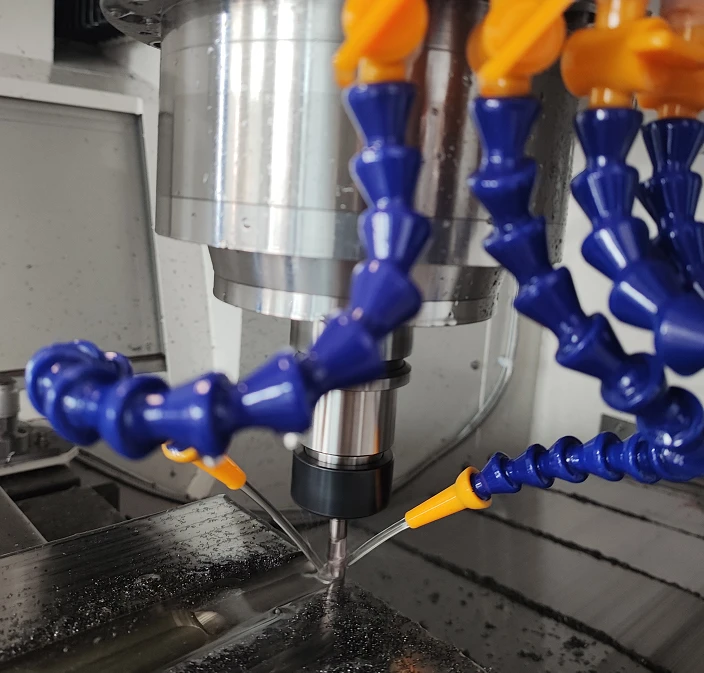
The most common materials used in plastic pipe fitting manufacturing are Polyvinyl Chloride (PVC), Chlorinated Polyvinyl Chloride (CPVC), Polypropylene (PP), Polyethylene (PE), and Acrylonitrile Butadiene Styrene (ABS). PVC, known for its rigidity and cost-effectiveness, exhibits a glass transition temperature (Tg) around 80°C, limiting its use in high-temperature applications. CPVC, through chlorination, increases the chlorine content, raising the Tg to approximately 100°C and improving resistance to chemical degradation. PP boasts excellent chemical resistance and is often used for hot and cold water systems, with a melting point around 130-170°C. PE, categorized into Low-Density Polyethylene (LDPE), High-Density Polyethylene (HDPE), and Cross-Linked Polyethylene (PEX), offers flexibility and resilience, particularly in cold-water applications. ABS provides high impact resistance but is less chemically resistant. Manufacturing processes include injection molding, compression molding, and extrusion. Injection molding is prevalent for smaller, intricate fittings. Critical parameters during injection molding are melt temperature, mold temperature, injection pressure, and cooling rate; deviations result in warping, sink marks, or incomplete filling. Extrusion is used for larger fittings and pipes, with control of barrel temperature profile, screw speed, and die design crucial for dimensional consistency. Post-processing operations include deburring, trimming, and quality control inspections. Chemical compatibility of the chosen polymer with the conveyed fluid is paramount to prevent swelling, softening, or leaching, which compromise structural integrity.
Performance & Engineering
Performance assessment of plastic pipe fittings requires consideration of several critical engineering factors. Pressure ratings, determined through hydrostatic testing per ASTM D1598, define the maximum internal pressure the fitting can withstand without failure. Burst pressure, significantly higher than the working pressure, assesses the ultimate strength. Long-term hydrostatic strength (LTHS), evaluated via accelerated aging tests, predicts performance over an extended lifespan. Tensile strength and elongation at break, measured according to ASTM D638, quantify the material's ability to resist deformation and fracture. Impact resistance, assessed using Izod or Charpy impact tests (ASTM D256), gauges susceptibility to brittle failure. Environmental stress cracking resistance (ESCR), evaluated using notched bar tests per ASTM D1694, determines resistance to failure under sustained stress in a corrosive environment. Finite Element Analysis (FEA) is extensively employed to simulate stress distributions under various loading conditions, optimizing fitting geometry for enhanced performance. Compliance with NSF/ANSI 61 ensures suitability for potable water contact, limiting the leaching of harmful substances. Thermal expansion and contraction rates of the plastic material necessitate careful consideration during system design to prevent stress on joints and pipelines. Creep, the time-dependent deformation under sustained load, must be accounted for in applications involving constant pressure and temperature.
Technical Specifications
| Material | Pressure Rating (PSI) @ 73°F | Operating Temperature (°F) | Tensile Strength (PSI) | Impact Strength (Izod, ft-lb/in) | Chemical Resistance |
|---|---|---|---|---|---|
| PVC | 400 | Up to 140 | 6,000 | 1.5 | Good (acids, bases, salts) |
| CPVC | 300 | Up to 194 | 7,500 | 2.0 | Excellent (acids, chlorine) |
| PP | 150 | Up to 180 | 5,000 | 3.0 | Excellent (most chemicals) |
| HDPE | 100 | Up to 140 | 4,000 | 8.0 | Good (acids, bases, solvents) |
| ABS | 200 | Up to 175 | 4,500 | 5.0 | Fair (limited chemical resistance) |
| PEX | 100 | Up to 180 | 3,500 | 6.0 | Good (most chemicals) |
Failure Mode & Maintenance
Plastic pipe fittings are susceptible to various failure modes. Hydrostatic failure, resulting from exceeding the pressure rating, manifests as catastrophic rupture. Environmental stress cracking (ESC), induced by prolonged exposure to corrosive chemicals under stress, initiates slow crack propagation, ultimately leading to leakage. UV degradation, particularly in outdoor applications, causes embrittlement and loss of impact resistance. Thermal fatigue, stemming from repeated temperature cycling, induces cracking around stress concentration points. Creep rupture occurs under sustained load over extended periods. Delamination can occur in multilayer fittings due to poor adhesion between layers. Maintenance practices include visual inspections for cracks, discoloration, or deformation. Periodic pressure testing verifies system integrity. Proper installation techniques, avoiding over-tightening or improper alignment, are crucial. For systems handling aggressive chemicals, regular material compatibility checks are recommended. UV stabilizers can be applied to fittings exposed to sunlight. If ESC is suspected, reducing stress or switching to a more resistant material is advised. Damaged fittings should be replaced immediately. Preventative maintenance schedules should be tailored to the specific application and operating conditions.
Industry FAQ
Q: What is the primary difference between PVC and CPVC fittings in terms of application?
A: CPVC fittings offer significantly higher temperature resistance than PVC fittings. While PVC is suitable for cold water and drain, waste, and vent (DWV) applications, CPVC is specifically designed for hot and cold potable water distribution systems where temperatures can exceed 140°F. The increased chlorine content in CPVC imparts this enhanced thermal performance and improved chemical resistance, particularly against chlorine-based disinfectants.
Q: How does the long-term hydrostatic strength (LTHS) of a fitting impact its service life?
A: LTHS is a critical indicator of a fitting’s ability to withstand sustained pressure over an extended period. A higher LTHS value translates to a longer predicted service life, reducing the risk of catastrophic failure due to creep or fatigue. LTHS is determined through accelerated aging tests, which simulate years of operation in a compressed timeframe.
Q: What factors contribute to environmental stress cracking (ESC) in plastic pipe fittings?
A: ESC is initiated by the combined action of a sustained mechanical stress, a susceptible polymer, and a corrosive environment. The stress can be from internal pressure, external load, or residual stress from manufacturing. Certain chemicals act as “stress cracking agents,” accelerating the process. Choosing a material with high ESC resistance, reducing stress levels, and avoiding contact with incompatible chemicals are key mitigation strategies.
Q: What are the implications of using fittings with different pressure ratings within a single pipeline system?
A: Utilizing fittings with mismatched pressure ratings creates a weak point in the system. The entire pipeline’s pressure rating must be dictated by the lowest rated component. This can lead to premature failure at the lower-rated fitting. It’s crucial to ensure all fittings within a system are rated to meet or exceed the maximum operating pressure.
Q: How do dimensional tolerances affect the leak-proof performance of plastic pipe fitting connections?
A: Precise dimensional tolerances are paramount for creating leak-proof seals. Variations in outside diameter (OD) or inside diameter (ID) can result in insufficient interference fit with the pipe, leading to leakage. Manufacturing processes and quality control procedures must be rigorously monitored to maintain tight tolerances as defined by relevant standards such as ASTM D1785 for PVC pipe dimensions.
Conclusion
Plastic pipe fittings represent a versatile and cost-effective solution for fluid conveyance in a wide array of applications. Material selection is fundamentally driven by operating temperature, chemical compatibility, and pressure requirements. Understanding the manufacturing processes and controlling key parameters is crucial for ensuring dimensional accuracy and structural integrity. Comprehensive performance evaluation, including hydrostatic testing, tensile strength measurements, and impact resistance assessments, is essential for validating product reliability.
Continued innovation in plastic pipe fitting technology focuses on developing more sustainable materials, enhancing long-term durability in harsh environments, and improving installation efficiency. Adherence to stringent industry standards, such as those established by ASTM, ISO, and NSF, is paramount for ensuring product quality and safety. A thorough understanding of potential failure modes and proactive maintenance practices are critical for maximizing the service life and minimizing the risk of costly downtime.