
Introduction
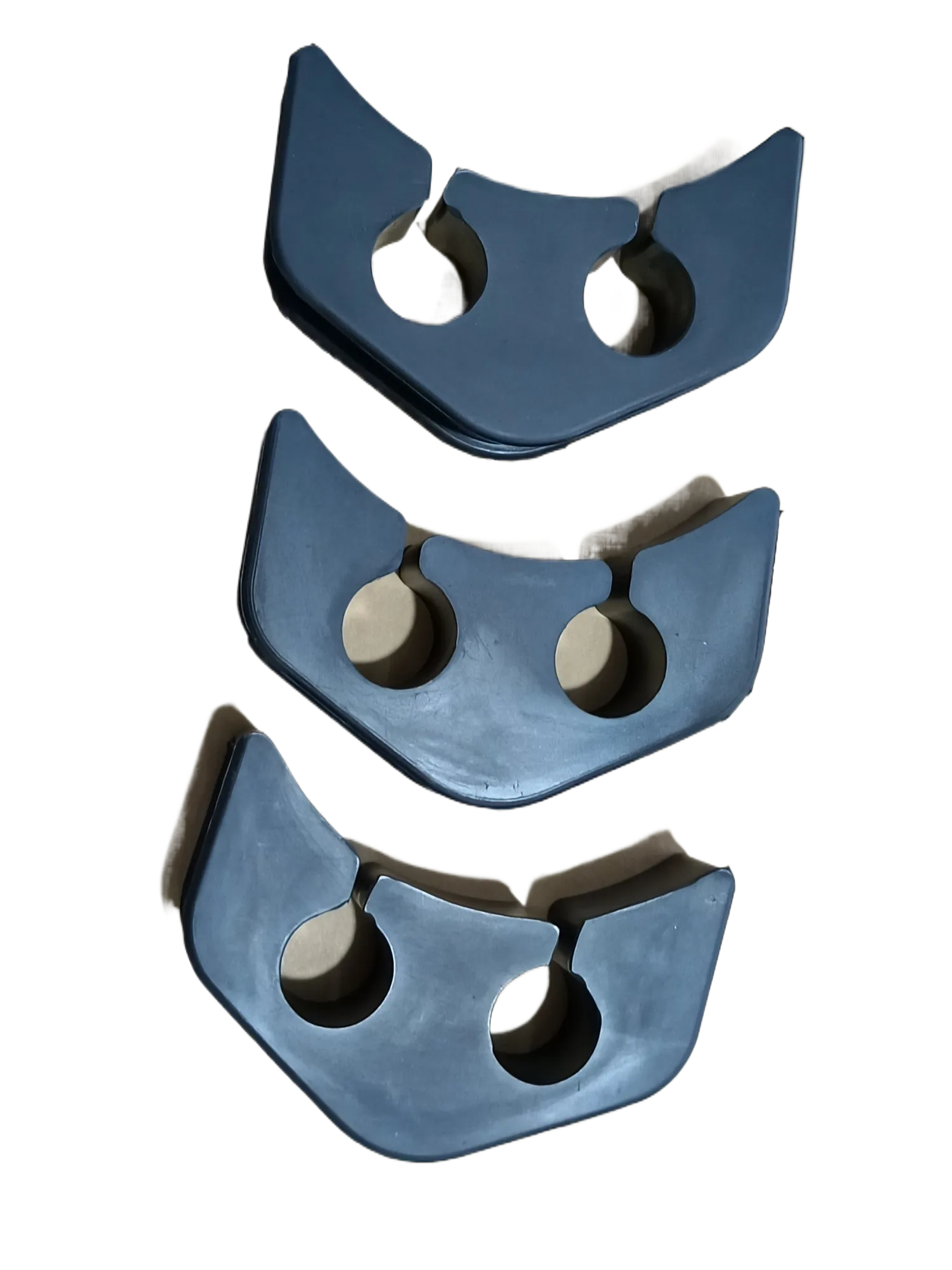
Custom plastic parts represent a critical component across diverse industrial sectors, ranging from automotive and aerospace to medical devices and consumer electronics. Unlike commodity plastic components produced in high volumes with limited variation, custom parts are engineered and manufactured to meet highly specific functional, geometric, and material requirements. This necessitates a detailed understanding of polymer science, manufacturing processes, and application-specific performance criteria. Their technical position within the supply chain falls between material resin suppliers and finished product assemblers. Core performance characteristics hinge on precise dimensional control, material selection optimized for the intended environment, and the ability to consistently replicate complex geometries. The demand for custom plastic parts is driven by trends toward lightweighting, miniaturization, and the increasing need for application-specific material solutions, frequently surpassing the capabilities of traditional materials like metals.
Material Science & Manufacturing
The foundation of custom plastic part production lies in the breadth of available thermoplastic and thermoset materials. Thermoplastics, such as Polycarbonate (PC), Acrylonitrile Butadiene Styrene (ABS), Polypropylene (PP), and Polyamide (Nylon), can be repeatedly softened by heating and hardened by cooling, lending themselves to processes like injection molding and thermoforming. Thermosets, including Epoxy, Phenolic, and Polyurethane, undergo irreversible chemical changes during curing, resulting in cross-linked structures with superior thermal stability and chemical resistance, typically processed via compression molding or resin transfer molding. Raw material properties impacting performance include molecular weight distribution (influencing melt flow and mechanical properties), glass transition temperature (Tg – dictating temperature resistance), and the presence of fillers (glass fiber, carbon fiber, minerals) for reinforcement or cost reduction.
Injection molding is the predominant manufacturing process for high-volume custom parts. It involves injecting molten plastic into a closed mold cavity. Critical parameters include melt temperature (affecting viscosity and part shrinkage), mold temperature (controlling surface finish and crystallization), injection pressure (ensuring complete mold filling), and cooling rate (minimizing warpage and residual stress). Thermoforming, used for larger, simpler geometries, involves heating a plastic sheet and draping it over a mold. 3D printing (Additive Manufacturing) is gaining traction for prototyping and low-volume production, offering design freedom but often at a higher cost per part. CNC machining is employed for tight tolerances and complex geometries, removing material from a solid block of plastic. Post-processing steps, such as ultrasonic welding, heat staking, and surface finishing, are frequently required to achieve final product specifications. Maintaining strict quality control over these parameters is paramount to ensure consistent part quality and performance.

Performance & Engineering
Performance analysis of custom plastic parts necessitates consideration of mechanical, thermal, and chemical factors. Finite Element Analysis (FEA) is commonly used to predict stress distribution under load, optimizing part geometry and material selection to prevent failure. Force analysis considers tensile strength (resistance to pulling forces), flexural modulus (resistance to bending), and impact strength (resistance to sudden impacts). Environmental resistance demands evaluation of UV stability (preventing degradation from sunlight), chemical resistance (withstanding exposure to solvents, acids, and bases), and temperature resistance (maintaining properties across a specified temperature range).
Compliance requirements vary significantly by industry. Medical devices, for example, must adhere to stringent biocompatibility standards (ISO 10993) and sterilization protocols. Automotive components require compliance with flammability regulations (FMVSS 302) and resistance to automotive fluids. Aerospace applications demand compliance with FAA and EASA regulations, including fire resistance and outgassing characteristics. Dimensional accuracy, often specified with Geometric Dimensioning and Tolerancing (GD&T), is crucial for proper assembly and functionality. Functional implementation details, such as snap-fit design, living hinges, and electrical conductivity, require careful engineering to ensure reliable performance over the product lifecycle.
Technical Specifications
| Material Type | Tensile Strength (MPa) | Flexural Modulus (GPa) | Heat Deflection Temperature (°C) |
|---|---|---|---|
| ABS | 30-45 | 2-3 | 85-105 |
| Polycarbonate | 60-75 | 2.4-2.8 | 135-150 |
| Nylon 6/6 | 80-100 | 2.5-3.5 | 170-190 |
| Polypropylene | 20-30 | 1.5-2.0 | 60-80 |
| Acrylic (PMMA) | 50-70 | 2.5-3.5 | 90-110 |
| Polyethylene (HDPE) | 25-35 | 1.2-1.8 | 80-90 |
Failure Mode & Maintenance
Custom plastic parts are susceptible to various failure modes depending on the material, application, and environmental conditions. Fatigue cracking, caused by repeated stress cycles, is common in structural components. Stress cracking, induced by exposure to chemicals, can lead to brittle failure. Environmental stress cracking (ESC) combines the effects of stress and a corrosive environment. Warpage, resulting from uneven cooling during molding or thermal expansion/contraction, can compromise dimensional accuracy. Degradation, caused by UV exposure or oxidation, leads to embrittlement and loss of mechanical properties. Delamination, particularly in composite structures, occurs when layers separate due to poor bonding or impact damage.
Preventive maintenance strategies include regular inspection for cracks or damage, lubrication of moving parts (where applicable), and protection from harsh chemicals and UV radiation. Proper storage conditions, avoiding extreme temperatures and humidity, are crucial. If failure occurs, failure analysis techniques such as fractography (examining fracture surfaces) and chemical analysis can identify the root cause and inform design improvements. Repairing plastic parts is often challenging, but adhesive bonding and welding techniques can be employed in some cases. Ultimately, selecting the appropriate material and manufacturing process, coupled with diligent quality control and preventative maintenance, minimizes the risk of failure and extends the service life of custom plastic components.
Industry FAQ
Q: What material selection considerations are most critical when designing a custom plastic part for a high-temperature application?
A: Heat Deflection Temperature (HDT) is the primary metric, but it’s not sufficient. Consider the continuous use temperature, factoring in stress levels and exposure duration. Long-term creep resistance is also critical. Materials like PEEK, PPS, and high-temperature Nylons are frequently used, but their cost is higher. FEA simulation to predict thermal stress distribution is highly recommended.
Q: How does gate location in injection molding impact part shrinkage and warpage?
A: Gate location significantly influences the flow of molten plastic. Ideally, the gate should be placed in the thickest section of the part to promote uniform cooling. Multiple gates may be necessary for complex geometries to minimize flow imbalances. Improper gate location can lead to localized shrinkage, warpage, and sink marks.
Q: What testing methods are commonly used to verify the chemical resistance of a custom plastic part?
A: Immersion testing, where samples are exposed to the target chemical for a specified period, is standard. Weight change, dimensional change, and visual inspection are used to assess degradation. Stress cracking resistance can be evaluated using bent-beam testing in the presence of the chemical. Accelerated aging tests can simulate long-term exposure.
Q: What are the key differences between using virgin plastic vs. recycled plastic in custom part manufacturing?
A: Virgin plastic generally exhibits more consistent properties and higher mechanical strength. Recycled plastic can have variability in composition and may contain contaminants, potentially affecting performance. However, advancements in recycling technologies are improving the quality of recycled materials. Cost is typically lower for recycled plastics, and their use promotes sustainability.
Q: What is the role of mold flow analysis in the design and manufacturing of custom plastic parts?
A: Mold flow analysis simulates the injection molding process, predicting plastic flow patterns, temperature distribution, and potential defects like weld lines, air traps, and sink marks. This allows engineers to optimize gate location, vent design, and cooling channels before mold fabrication, reducing cycle times and improving part quality, and ultimately minimizing costly mold rework.
Conclusion
The successful implementation of custom plastic parts relies on a holistic understanding of material science, manufacturing processes, and engineering principles. Precise material selection, optimized process control, and diligent quality assurance are essential to achieving the desired performance characteristics and ensuring long-term reliability. The ongoing trend toward advanced materials, additive manufacturing technologies, and sophisticated simulation tools continues to expand the capabilities and applications of custom plastic components across a broad spectrum of industries.
Future advancements will likely focus on developing bio-based and biodegradable plastics, improving the recyclability of existing materials, and integrating sensors and embedded electronics into plastic parts. A commitment to sustainable manufacturing practices and a continued emphasis on innovation will be critical to meeting the evolving demands of the market and unlocking the full potential of custom plastic solutions.