
Introduction
Polyvinyl Chloride (PVC) pipe parts are fundamental components within fluid conveyance systems across diverse industries including water distribution, wastewater treatment, irrigation, chemical processing, and construction. Positioned downstream from the polymerization of vinyl chloride monomer, PVC pipe fittings – encompassing elbows, tees, couplings, valves, and specialized adapters – facilitate the connection and direction of fluid flow. Their widespread adoption stems from a unique combination of properties: corrosion resistance, low cost, ease of installation, and high flow capacity. However, PVC’s performance is heavily reliant on formulation, manufacturing process controls, and proper application parameters. This guide provides an in-depth examination of PVC pipe parts, covering material science, manufacturing, performance characteristics, failure modes, and industry standards, intended for engineers, procurement professionals, and technical staff responsible for system design and maintenance.
Material Science & Manufacturing
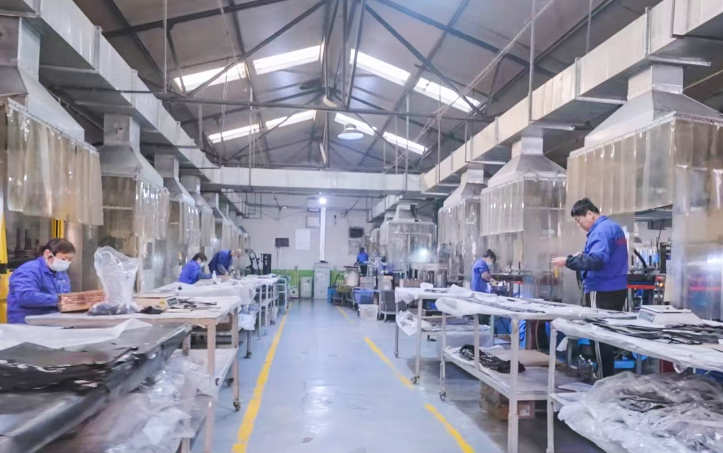
PVC is a thermoplastic polymer composed of carbon, hydrogen, and chlorine. The key raw material, vinyl chloride monomer (VCM), is produced via the oxychlorination process or direct chlorination of ethylene. PVC’s properties are significantly influenced by the addition of plasticizers, stabilizers, lubricants, and processing aids. Plasticizers, such as phthalates or DINP, impart flexibility, reducing brittleness and increasing impact resistance. Stabilizers, typically based on tin or calcium-zinc compounds, protect the PVC from degradation during processing and prolonged UV exposure. Manufacturing processes vary depending on the type of fitting. Injection molding is commonly used for smaller, complex shapes, requiring precise temperature and pressure control to ensure complete fill and minimize warpage. Extrusion is employed for larger diameter fittings and pipes. Critical parameters during extrusion include die temperature, screw speed, and cooling rate, all impacting the dimensional accuracy and surface finish. Post-processing operations such as deburring and end-facing are essential for achieving proper sealing and ensuring compatibility with other components. The molecular weight distribution of the PVC resin directly influences the mechanical properties; a broader distribution generally leads to improved impact strength but can compromise tensile strength. The glass transition temperature (Tg) of PVC is approximately 80°C, and exceeding this temperature can lead to a loss of rigidity and dimensional instability. Formulation ratios must be carefully maintained to achieve desired mechanical properties and chemical resistance.
Performance & Engineering
The performance of PVC pipe parts is governed by several key engineering considerations. Hydrostatic pressure rating, determined through standardized burst tests (ASTM D1595), dictates the maximum operating pressure. Impact strength, assessed using Izod or Charpy impact tests (ASTM D256), indicates the material’s resistance to sudden loads. Soil burial applications necessitate consideration of long-term creep resistance, as PVC can exhibit time-dependent deformation under sustained load. Chemical resistance is paramount, particularly in industrial applications. PVC exhibits good resistance to acids, bases, and salts, but is susceptible to degradation by certain organic solvents and aromatic hydrocarbons. Finite element analysis (FEA) is often employed to optimize fitting designs, minimizing stress concentrations and ensuring structural integrity under various loading conditions. Temperature fluctuations significantly impact PVC’s performance. While PVC maintains adequate strength at ambient temperatures, its mechanical properties decrease substantially at elevated temperatures. Thermal expansion and contraction must be accounted for in system design to prevent stress buildup and potential joint failures. Long-term UV exposure can lead to embrittlement and discoloration; UV stabilizers are crucial for outdoor applications. Understanding the Poisson's ratio of PVC (typically around 0.35) is essential for accurate stress analysis. The modulus of elasticity, typically ranging from 3-4 GPa, defines PVC’s stiffness.
Technical Specifications
| Parameter | Schedule 40 PVC | Schedule 80 PVC | CPVC (Chlorinated PVC) | Units |
|---|---|---|---|---|
| Tensile Strength | 60-70 | 65-75 | 70-80 | MPa |
| Yield Strength | 50-60 | 55-65 | 60-70 | MPa |
| Impact Strength (Izod Notched) | 5-8 | 7-10 | 10-15 | kJ/m² |
| Water Absorption (24hr) | 0.2-0.4 | 0.2-0.4 | 0.1-0.3 | % |
| Hardness (Shore D) | 70-75 | 75-80 | 80-85 | - |
| Maximum Operating Temperature | 60 | 60 | 93 | °C |
Failure Mode & Maintenance
PVC pipe parts are susceptible to several failure modes. Stress cracking, induced by sustained tensile stress in the presence of aggressive chemicals, is a common issue. Environmental stress cracking (ESC) is particularly prevalent in buried applications. Fatigue cracking can occur under cyclic loading, particularly at joints and threaded connections. UV degradation leads to embrittlement and loss of impact resistance, manifesting as surface cracking and eventual fracture. Chemical attack from incompatible solvents can cause swelling, softening, and loss of mechanical properties. Joint failures often result from improper solvent cementing, inadequate surface preparation, or thermal expansion/contraction stresses. Maintenance strategies include regular visual inspections for cracks, leaks, and discoloration. Pressure testing should be conducted periodically to verify system integrity. Damaged fittings should be replaced immediately. Proper backfilling and bedding procedures are crucial for preventing soil-induced stress and supporting the pipeline. For systems handling aggressive chemicals, material compatibility should be verified, and specialized PVC formulations or alternative materials considered. Preventative maintenance programs should include cleaning and flushing to remove debris and prevent clogging. Care should be taken during installation to avoid over-tightening threaded connections, which can induce stress cracking.
Industry FAQ
Q: What is the difference between Schedule 40 and Schedule 80 PVC, and when should each be used?
A: Schedule 40 PVC has thinner walls and is suitable for lower-pressure applications, such as residential water lines and irrigation systems. Schedule 80 PVC has thicker walls, providing higher pressure ratings and increased impact resistance, making it ideal for industrial applications, chemical processing, and high-demand water distribution systems. The higher schedule number denotes a greater wall thickness and therefore greater pressure capacity.
Q: How does temperature affect the performance of PVC pipe fittings?
A: Elevated temperatures reduce the pressure-bearing capacity and impact strength of PVC. Approaching the glass transition temperature (80°C) causes a significant loss of rigidity. Conversely, low temperatures can increase brittleness. Systems operating at extreme temperatures require careful consideration of material selection and expansion/contraction allowances.
Q: What types of chemicals are incompatible with PVC?
A: PVC is vulnerable to degradation by certain organic solvents (ketones, esters, aromatics), chlorinated hydrocarbons, and strong oxidizing agents. Exposure to these chemicals can cause swelling, softening, and cracking. Always consult a chemical compatibility chart before using PVC in applications involving unknown substances.
Q: What are the critical steps for proper solvent cementing of PVC fittings?
A: Proper solvent cementing requires thorough surface preparation – cleaning and deburring. The primer should be applied to soften the PVC surface, followed by the cement. Parts should be assembled quickly and held firmly for the recommended time to ensure a complete bond. Excessive cement can weaken the joint, while insufficient cement leads to poor adhesion. Always use approved PVC primers and cements.
Q: What is CPVC, and what advantages does it offer over standard PVC?
A: CPVC (Chlorinated PVC) is a PVC formulation with increased chlorine content, resulting in enhanced temperature resistance. CPVC can withstand temperatures up to 93°C, making it suitable for hot water distribution systems and industrial applications requiring higher thermal stability. It also exhibits improved chemical resistance compared to standard PVC.
Conclusion
PVC pipe parts represent a cost-effective and versatile solution for fluid conveyance across a multitude of industries. Their performance is intrinsically linked to material selection, manufacturing rigor, and correct installation practices. Understanding the fundamental material science, potential failure modes, and relevant industry standards is crucial for ensuring long-term reliability and preventing costly system failures.
Future advancements in PVC technology focus on enhancing impact resistance, improving UV stability, and developing more sustainable formulations utilizing bio-based plasticizers. Adherence to stringent quality control measures and a proactive approach to maintenance are essential for maximizing the lifespan and minimizing the lifecycle costs of PVC piping systems. Careful consideration of application-specific requirements and a thorough understanding of material limitations are paramount for successful implementation.