
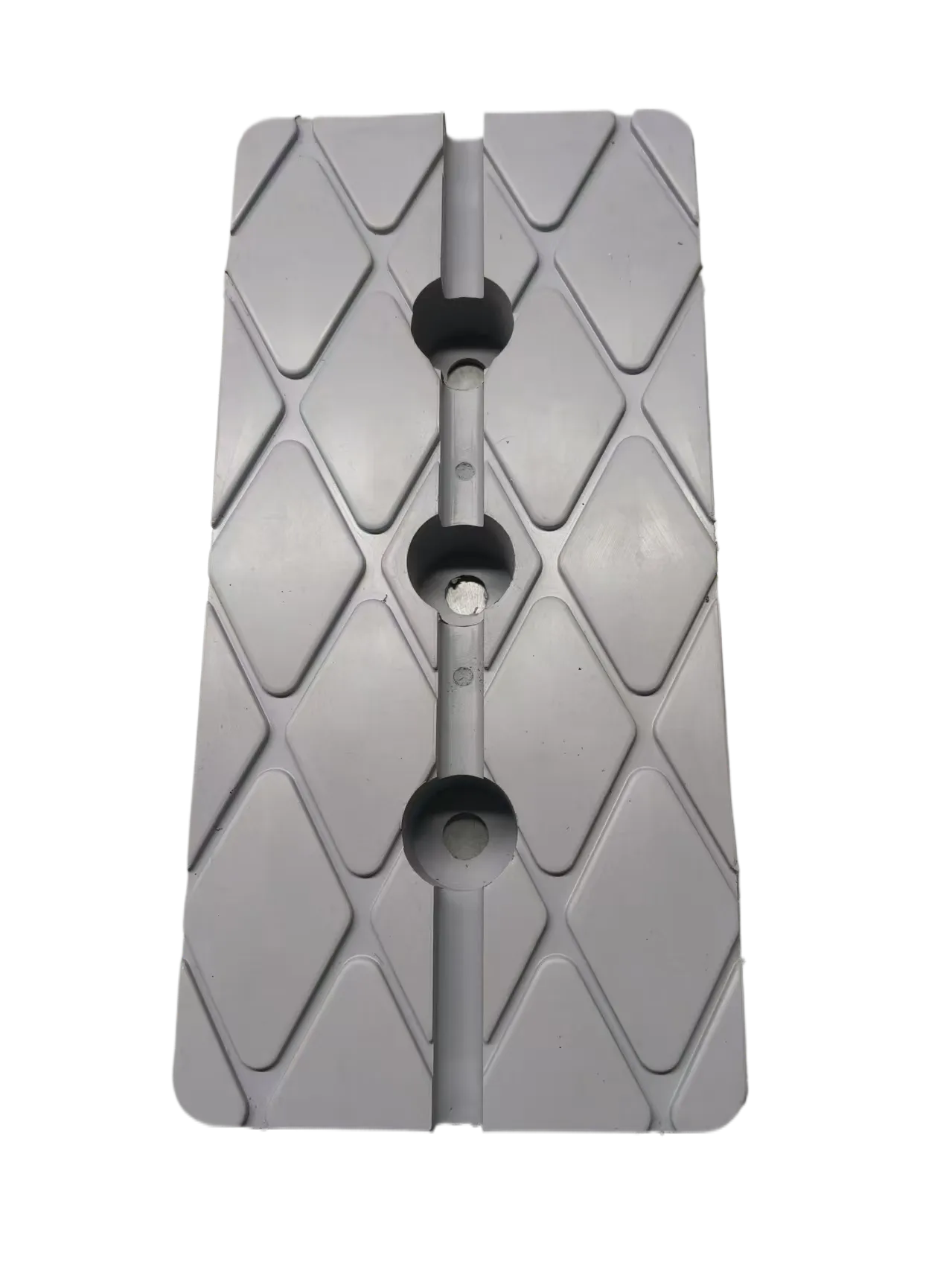
Introduction
Polyvinyl chloride (PVC) accessories encompass a wide range of components utilized in fluid handling, construction, and industrial applications. These accessories, including elbows, tees, couplings, valves, and adaptors, are integral to the functionality and longevity of PVC piping systems. Their technical position within the industry chain is as essential connecting elements, bridging straight pipe lengths and enabling complex network configurations. Core performance characteristics center around maintaining pressure integrity, resisting chemical attack, and providing reliable, leak-proof joints. The selection of appropriate PVC accessories is critical, as failures in these components can lead to system downtime, environmental contamination, and safety hazards. The industry faces challenges related to material degradation due to UV exposure and specific chemical compatibility, demanding a thorough understanding of PVC formulations and installation best practices. PVC accessories are typically manufactured to meet rigorous industry standards, ensuring consistent performance and interoperability.
Material Science & Manufacturing
PVC accessories are predominantly manufactured from polyvinyl chloride resin, a thermoplastic polymer derived from vinyl chloride monomer. The base resin’s properties are modified through the addition of plasticizers (typically phthalates or alternatives), stabilizers (to prevent degradation from heat and UV exposure), lubricants (to aid processing), and pigments (for color). The inherent physical properties of PVC – a glass transition temperature (Tg) around 80°C, a tensile strength of 50-70 MPa, and a density of 1.4 g/cm³ – dictate its suitability for a range of applications. Manufacturing processes vary depending on the accessory type and size. Smaller accessories are commonly produced via injection molding. This process involves injecting molten PVC into a closed mold, where it cools and solidifies. Critical parameters include mold temperature, injection pressure, and cooling rate, which influence dimensional accuracy and surface finish. Larger diameter accessories, such as fittings for industrial pipelines, are often manufactured using extrusion. PVC compound is forced through a die to create a continuous profile, which is then cut to length and finished. Extrusion requires precise control of die temperature, screw speed, and pull rate to ensure consistent wall thickness and dimensional tolerances. Welding processes, including solvent cementing and thermal fusion, are crucial for joining PVC accessories to piping systems. Solvent cementing involves using a chemical solvent to partially dissolve the PVC surfaces, creating a fusion weld. Thermal fusion utilizes heat to melt and fuse the materials together. Chemical compatibility is paramount; the plasticizers within the PVC formulation must resist leaching when exposed to transported fluids. UV stabilizers, such as titanium dioxide, are added to protect against photodegradation and cracking.
Performance & Engineering
The performance of PVC accessories is fundamentally governed by their ability to withstand internal pressure, resist external loads, and maintain long-term durability in specific environments. Force analysis is critical in designing PVC fittings, particularly those subjected to bending moments or tensile stresses. Finite Element Analysis (FEA) is frequently employed to simulate stress distributions and optimize geometry. Environmental resistance is a significant consideration. PVC exhibits good resistance to acids, alkalis, and many chemicals, but it can be susceptible to degradation by certain organic solvents and chlorinated hydrocarbons. Temperature limitations are also important; PVC becomes brittle at low temperatures and can soften or deform at elevated temperatures. Compliance requirements, such as those stipulated by NSF/ANSI 61 for potable water systems and ASTM D1785 for PVC piping, dictate material specifications and performance testing criteria. Functional implementation requires careful attention to installation practices. Proper solvent cementing techniques, including surface preparation, application of primer, and adequate curing time, are essential for achieving leak-proof joints. The coefficient of thermal expansion of PVC (approximately 8 x 10⁻⁵ /°C) must be accounted for in system design to prevent stress buildup due to temperature fluctuations. Furthermore, the long-term creep resistance of PVC influences its ability to maintain dimensional stability under sustained loads. Electrical conductivity is generally low for standard PVC, but specialized conductive PVC compounds are available for applications requiring grounding or static dissipation.
Technical Specifications
| Parameter | Schedule 40 PVC | Schedule 80 PVC | CPVC (Chlorinated PVC) | Units |
|---|---|---|---|---|
| Pressure Rating | 350 psi @ 73°F | 600 psi @ 73°F | 400 psi @ 150°F | psi |
| Tensile Strength | 6,500 | 7,000 | 8,500 | psi |
| Flexural Modulus | 300,000 | 320,000 | 380,000 | psi |
| Water Absorption (24hr) | <0.1% | <0.1% | <0.1% | % |
| Operating Temperature Range | -40°F to 140°F | -40°F to 140°F | -40°F to 180°F | °F |
| Coefficient of Thermal Expansion | 8.0 x 10⁻⁵ | 8.0 x 10⁻⁵ | 7.0 x 10⁻⁵ | /°F |
Failure Mode & Maintenance
PVC accessories are susceptible to several failure modes, primarily related to material degradation and improper installation. Fatigue cracking can occur in fittings subjected to cyclic pressure or mechanical stress, particularly at stress concentrators such as threads or corners. Delamination can arise in laminated or co-extruded fittings due to inadequate adhesion between layers. Chemical attack from incompatible fluids can cause swelling, softening, or embrittlement of the PVC material. UV degradation leads to surface cracking and loss of mechanical properties, especially in exposed applications. Oxidation can occur at elevated temperatures, causing discoloration and reducing impact resistance. Improper solvent cementing is a common cause of failure, resulting in leaks at joints due to inadequate fusion. Maintenance involves regular visual inspections for cracks, discoloration, or leaks. Cleaning PVC accessories with mild soap and water is recommended to remove dirt and debris. Avoid abrasive cleaners or solvents that can damage the material. For systems carrying corrosive fluids, periodic testing of the PVC material for chemical compatibility is advisable. In the event of a crack or significant damage, the accessory should be replaced immediately. Preventative maintenance includes protecting PVC accessories from direct sunlight with coatings or shielding and ensuring proper ventilation to prevent the buildup of corrosive fumes. Stress relief measures, such as expansion loops, should be incorporated into the piping system to minimize stress on fittings due to thermal expansion and contraction.
Industry FAQ
Q: What is the impact of different plasticizers on the long-term performance of PVC accessories?
A: The type of plasticizer significantly influences flexibility, low-temperature performance, and resistance to chemical leaching. Phthalate plasticizers, while cost-effective, are facing increasing regulatory scrutiny due to health concerns. Alternative plasticizers, such as adipates and citrates, offer improved environmental profiles but may have different performance characteristics, such as lower temperature flexibility or higher cost. The plasticizer’s migration rate also affects the long-term durability and mechanical properties of the PVC accessory.
Q: How does the Schedule number (e.g., Schedule 40 vs. Schedule 80) affect the pressure rating and wall thickness of PVC accessories?
A: The Schedule number denotes the wall thickness of the PVC accessory. Higher Schedule numbers (e.g., 80) indicate thicker walls and, consequently, higher pressure ratings. Schedule 80 PVC accessories can withstand significantly higher internal pressures than Schedule 40 accessories. However, thicker walls also translate to increased material cost and weight.
Q: What are the key considerations when selecting PVC accessories for handling specific chemicals?
A: Chemical compatibility is crucial. Consult chemical resistance charts to ensure the PVC formulation is resistant to the transported fluid. Factors to consider include the concentration of the chemical, temperature, and exposure duration. Certain organic solvents, chlorinated hydrocarbons, and strong oxidizing agents can cause PVC degradation. CPVC offers improved chemical resistance in some applications.
Q: What is the proper procedure for solvent cementing PVC accessories, and what are common causes of joint failure?
A: The proper procedure involves cleaning and priming both surfaces to be joined, applying a uniform layer of solvent cement, and immediately joining the parts with a slight twisting motion to ensure complete coverage. Allow adequate curing time before pressurizing the system. Common causes of failure include inadequate surface preparation, insufficient cement application, improper alignment, and curing at low temperatures.
Q: What is the role of UV stabilizers in PVC accessories, and how do they impact the service life of outdoor installations?
A: UV stabilizers, such as titanium dioxide, protect the PVC material from degradation caused by ultraviolet radiation. UV exposure can lead to surface cracking, discoloration, and loss of mechanical properties. Effective UV stabilizers significantly extend the service life of PVC accessories in outdoor installations. The concentration and type of UV stabilizer influence its effectiveness.
Conclusion
PVC accessories represent a critical component within numerous industrial and infrastructural systems. Their performance relies heavily on a complex interplay between material science, manufacturing precision, and adherence to industry standards. Understanding the nuances of PVC formulations, the effects of environmental factors, and the potential failure modes is essential for ensuring long-term reliability and preventing costly system failures. Proper selection, installation, and maintenance practices are paramount to maximizing the service life of these components.
The ongoing development of advanced PVC formulations, including alternative plasticizers and enhanced UV stabilizers, aims to address current industry challenges and expand the range of applications for PVC accessories. Future trends may include the integration of smart sensors for monitoring system performance and predictive maintenance, as well as the development of more sustainable PVC recycling processes. A continued focus on robust quality control and compliance with evolving regulatory requirements will be crucial for maintaining the integrity and safety of PVC piping systems.