
Introduction
PVC pipe accessories represent a critical component in fluid conveyance systems across diverse industrial, agricultural, and infrastructural applications. These accessories, encompassing fittings such as elbows, tees, couplings, valves, and adapters, facilitate the connection and manipulation of PVC pipes, enabling the efficient and reliable transport of liquids and gases. Positioned within the broader plumbing and piping industry chain, their performance directly impacts system integrity, operational efficiency, and long-term durability. Core performance characteristics are defined by pressure rating, chemical resistance, dimensional accuracy, and adherence to stringent industry standards, addressing key pain points like leakage, corrosion, and system failure. Understanding the nuances of PVC accessory design, material properties, and installation practices is paramount for engineers and procurement professionals seeking optimal system performance and minimizing lifecycle costs.
Material Science & Manufacturing
PVC (Polyvinyl Chloride) pipe accessories are primarily manufactured from rigid PVC compounds. The base resin, PVC, is a thermoplastic polymer produced by the polymerization of vinyl chloride monomer. Critical raw material properties include molecular weight, K-value (indicating molecular chain length and therefore viscosity), and chlorine content, all influencing final product characteristics. Plasticizers, stabilizers (typically lead-based or calcium-zinc-based), lubricants, and pigments are added to the PVC resin to modify processing characteristics, enhance durability, and impart desired color.
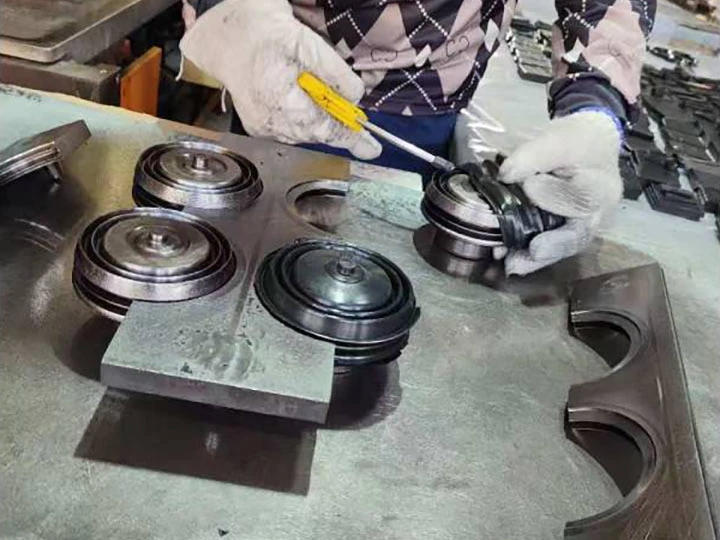
Manufacturing processes vary based on accessory type. Injection molding is commonly used for smaller fittings like elbows, tees, and couplings, utilizing precisely engineered molds and controlled temperature/pressure profiles to achieve dimensional accuracy. Extrusion is employed for larger diameter fittings and valve bodies, where molten PVC is forced through a die to create a continuous profile, subsequently cut to length. Welding processes, specifically solvent welding (using PVC cement), are crucial for joining PVC accessories to pipes, relying on a chemical reaction that fuses the materials together. Key parameter control during manufacturing includes melt temperature, injection pressure, cooling rate (for injection molding), die temperature and pull speed (for extrusion), and the precise application of solvent cement. Inadequate control can result in dimensional inaccuracies, residual stress, and compromised joint strength. Post-manufacturing quality control includes hydrostatic pressure testing to verify pressure rating, dimensional inspection, and visual defect assessment.
Performance & Engineering
The performance of PVC pipe accessories is governed by several engineering considerations. Stress analysis is critical, particularly concerning pressure-induced stresses within the fitting body and at joint interfaces. Finite Element Analysis (FEA) is often employed to model stress distribution and optimize accessory design for specific pressure ratings and operating temperatures. The material’s creep resistance – its tendency to deform under sustained load – is a significant factor, especially in long-term applications. Environmental resistance is paramount. PVC exhibits good resistance to many chemicals, but can be degraded by prolonged exposure to certain solvents, strong acids, and UV radiation. Therefore, understanding the chemical compatibility of PVC with the conveyed fluid is essential. Compliance requirements are dictated by relevant standards (detailed in the footer), governing dimensional tolerances, pressure testing procedures, and material specifications. Functional implementation considerations include flow characteristics (minimizing pressure drop through fittings), ease of installation (ensuring proper solvent welding techniques), and long-term system reliability.
Corrosion resistance, while inherent in PVC itself, is impacted by the quality of the stabilizers used in the compound. Degradation of stabilizers over time can lead to embrittlement and cracking. Thermal expansion and contraction, due to temperature fluctuations, must also be considered in system design to prevent stress on joints and potential leakage.
Technical Specifications
| Parameter | Schedule 40 PVC | Schedule 80 PVC | CPVC (Chlorinated PVC) | Material Hardness (Shore D) |
|---|---|---|---|---|
| Pressure Rating (psi at 73°F) | 400 | 600 | 400 (at 73°F, varies with temperature) | 70-80 |
| Temperature Rating (°F) | 0-140 | 0-140 | -40 to 230 | N/A |
| Tensile Strength (psi) | 6,000-8,000 | 6,000-8,000 | 8,500-10,000 | N/A |
| Flexural Modulus (psi) | 300,000-400,000 | 300,000-400,000 | 400,000-500,000 | N/A |
| Impact Strength (Izod Notched, ft-lb/in) | 1.0-1.5 | 1.2-1.8 | 2.0-2.5 | N/A |
| Water Absorption (24 hours, %) | <0.1 | <0.1 | <0.1 | N/A |
Failure Mode & Maintenance
PVC pipe accessories can fail through several mechanisms. Fatigue cracking, particularly at stress concentration points (e.g., around weld beads or sharp corners), can occur under cyclical pressure loading. Chemical attack, from incompatible fluids, leads to degradation and embrittlement. UV degradation, causing surface cracking and loss of mechanical properties, is prevalent in outdoor applications. Solvent welding failures are common due to inadequate surface preparation, improper cement application, or insufficient curing time, resulting in weak joints. Thermal stress cracking can occur during rapid temperature changes, especially in rigid PVC systems.
Maintenance primarily focuses on preventative measures. Regular visual inspections should identify cracks, discoloration, or signs of degradation. Proper support and anchoring of pipelines minimize stress on fittings. Protective coatings or shielding can mitigate UV exposure. In case of leakage, the affected accessory should be replaced. Proper solvent welding procedures – including cleaning surfaces with a primer, applying cement evenly, and allowing sufficient curing time – are crucial for long-term reliability. If chemical exposure is anticipated, selecting CPVC accessories offers enhanced chemical resistance, albeit at a higher cost.
Industry FAQ
Q: What are the key differences between Schedule 40 and Schedule 80 PVC accessories, and when should each be used?
A: Schedule 80 PVC accessories have thicker walls than Schedule 40, resulting in a higher pressure rating and increased resistance to impact. Schedule 40 is typically sufficient for residential and light commercial applications with moderate pressure requirements. Schedule 80 is preferred for high-pressure systems, industrial applications, and situations where greater mechanical strength is needed, such as underground installations where external loads are present.
Q: How does temperature affect the performance of PVC accessories?
A: PVC’s mechanical properties decrease with increasing temperature. The pressure rating of PVC accessories is typically specified at 73°F (23°C). As temperature rises, the allowable pressure decreases. Extended exposure to high temperatures can also accelerate degradation. For higher temperature applications, CPVC accessories are recommended as they offer significantly improved temperature resistance.
Q: What is the proper procedure for solvent welding PVC accessories?
A: The procedure involves cleaning both surfaces with a PVC primer to soften the material and create a chemical bond. Apply PVC cement evenly to both surfaces, avoiding excessive amounts. Immediately join the fitting and pipe with a slight twisting motion to ensure even cement distribution. Hold the joint firmly for 30-60 seconds to allow initial bonding. Allow sufficient curing time (typically 24 hours) before pressure testing the system.
Q: What precautions should be taken when handling PVC accessories exposed to UV radiation?
A: Prolonged exposure to UV radiation can cause PVC to become brittle and crack. To mitigate this, consider using UV-resistant PVC compounds, applying a protective coating, or shielding the pipes and accessories from direct sunlight. Buried installations are, of course, protected from UV exposure.
Q: What are the implications of using incompatible chemicals with PVC accessories?
A: Exposure to certain chemicals (e.g., strong solvents, concentrated acids) can cause PVC to swell, soften, or dissolve, leading to leaks and system failure. Always verify the chemical compatibility of PVC with the conveyed fluid before installation. CPVC offers broader chemical resistance but should also be evaluated for compatibility.
Conclusion
PVC pipe accessories are essential components for reliable fluid handling systems. Their performance is intrinsically linked to the careful selection of materials, precise manufacturing processes, and adherence to established engineering principles. Understanding the material science underpinning PVC’s properties – including its susceptibility to temperature, chemical attack, and UV degradation – is critical for mitigating potential failure modes and ensuring long-term operational integrity.
Moving forward, innovations in PVC compounding, such as the development of enhanced stabilizer systems and UV-resistant formulations, will continue to expand the range of applications for these accessories. Proper installation techniques, particularly solvent welding, remain paramount, and ongoing research into alternative joining methods may further improve system reliability. Selecting the appropriate schedule (40 or 80) and considering CPVC for demanding applications will contribute to optimized system performance and reduced lifecycle costs.